









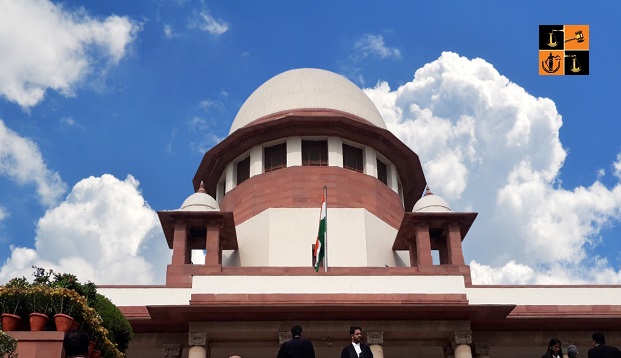
The Supreme Court held that a minimum period of legal practice as an advocate is essential for eligibility to apply for entry-level posts in the judicial service. The decision was rendered in a batch of applications connected to the long-standing All India Judges Association litigation. The apex court reinstated the requirement of professional legal practice, which had earlier been dispensed with, observing that the absence of advocacy experience among judicial aspirants could adversely affect the quality of the subordinate judiciary.
Brief Facts:
Initially, most State Judicial Services mandated a minimum of three years of practice as an advocate for candidates applying for posts such as Civil Judge (Junior Division) or Judicial Magistrate. However, this requirement was set aside following a 2002 ruling by the Supreme Court in the All India Judges Association case, wherein the Court accepted recommendations to allow even fresh law graduates to compete directly for judicial service.
Subsequently, several High Courts and stakeholders expressed concerns regarding the decline in practical experience among new judicial officers, prompting fresh applications before the Supreme Court seeking a review of the 2002 relaxation. The Court, after hearing all stakeholders, had reserved its verdict in January 2025 and stayed certain ongoing recruitment processes, including one by the Gujarat High Court, which did not mandate the practice requirement.
Contentions of the Counsel:
Amicus Curiae, Senior Advocate Siddharth Bhatnagar, argued in favour of reinstating the condition of minimum practice. He emphasized that allowing law graduates without practical exposure to enter the judiciary directly undermines the very fabric of adjudication, as practical courtroom experience forms the bedrock of judicial wisdom. He also highlighted that the existing model allowed candidates to technically comply by merely enrolling and signing vakalatnamas without actual court engagement, thereby diluting the objective behind the requirement.
The majority of High Courts and State Governments supported this viewpoint, contending that a minimum of two to three years’ active practice is necessary for judicial officers to discharge their responsibilities effectively. Only a few High Courts, notably from Sikkim and Chhattisgarh, maintained that the earlier relaxation was still viable and need not be reversed.
Observations of the Court:
The Court took note of the ground realities post-2002 and reconsidered its earlier view. It quoted from the 2002 judgment, “Experience has shown that the best talent available is not attracted to judicial service. A bright young law graduate after three years of practice may not find the service attractive enough.”
The Court acknowledged this rationale but emphasized that actual experience in advocacy, even if brief, was irreplaceable in terms of understanding procedural nuances, courtroom decorum, and practical aspects of legal practice.
The bench, comprising Chief Justice of India BR Gavai, Justice A.G. Masih, and Justice K. Vinod Chandran, observed, "We are of the considered view that reintroducing a minimum practice requirement would strengthen the institutional integrity and competence of the lower judiciary. While concerns regarding the cosmetic compliance of this condition are valid, such concerns cannot become the basis for its complete removal."
The Court further noted that requiring a period of genuine practice helps build professional maturity and judicial temperament, qualities indispensable for a career on the Bench.
The decision of the Court:
In light of these considerations, the Apex Court ruled that a minimum tenure of practice as an advocate shall once again be a mandatory qualification for candidates aspiring to join the judicial services. It clarified that the period of practice may be computed from the date of provisional enrollment or from the successful completion of the All India Bar Examination. The Court directed all State Governments and High Courts to amend their respective recruitment rules accordingly.
Picture Source :



















