









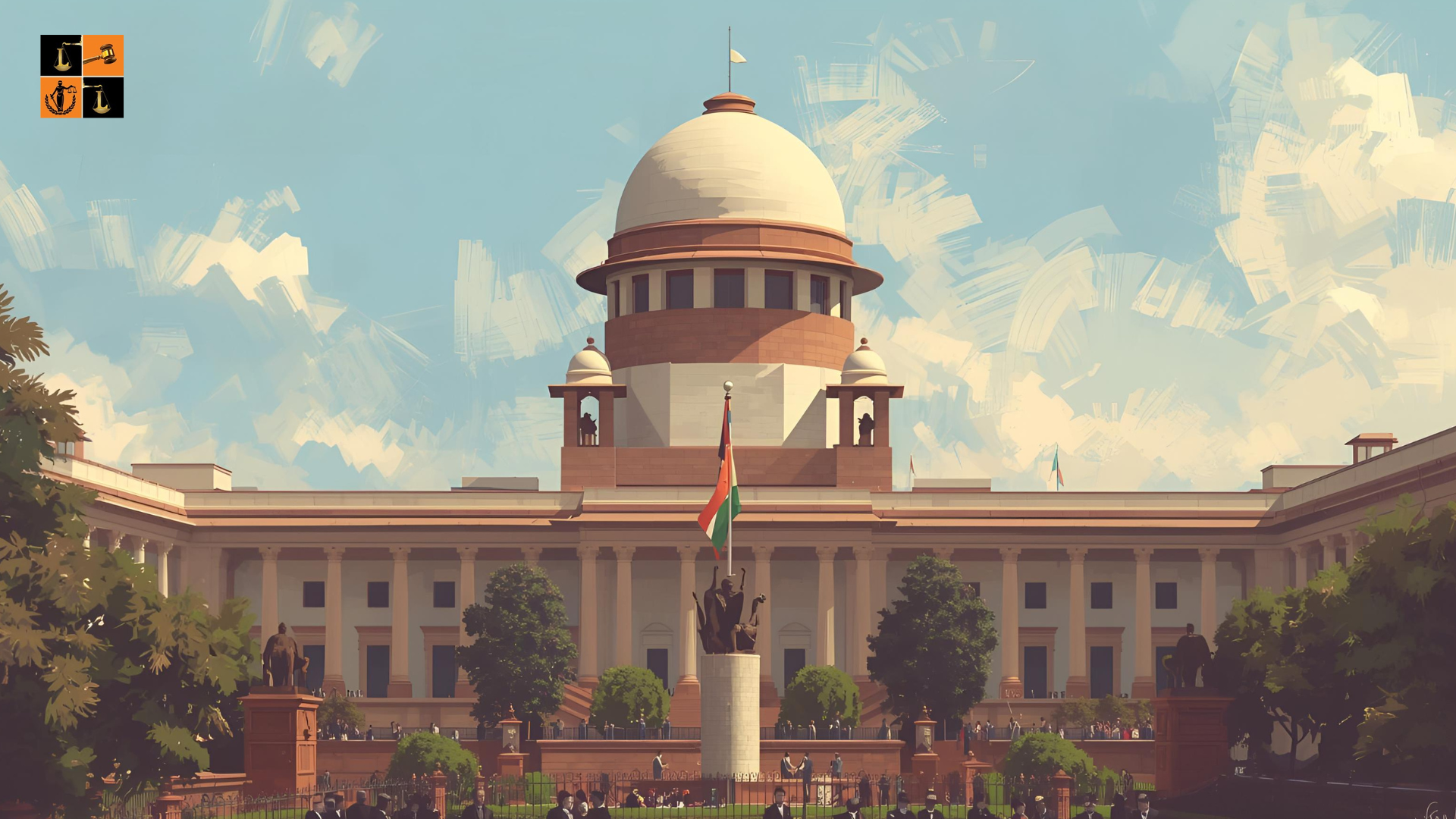
The Supreme Court, while hearing petitions challenging the Special Intensive Revision (SIR) of electoral rolls in West Bengal and Tamil Nadu, observed that it has the authority to extend the deadline for publication of draft electoral rolls if deemed necessary. The remarks came during the hearing of petitions raising concerns over the Court listing the West Bengal matters for December 9, coinciding with the scheduled draft roll publication under the SIR exercise. The Court emphasized that procedural timelines cannot curtail its powers to ensure fairness and legality in electoral processes.
The petitions pertain to challenges against the SIR conducted by the Election Commission of India (ECI) in several states, including Tamil Nadu, West Bengal, Kerala, Puducherry, and Bihar. In Tamil Nadu, political parties such as DMK, CPI(M), and other leaders contended that the ECI’s SIR introduced new citizenship verification requirements for voters not listed in the 2003 electoral rolls, effectively assuming powers under the Citizenship Act, 1955, and transforming the exercise into a quasi-national registry. AIADMK, conversely, supported the SIR, arguing it was essential to maintain electoral integrity.
In West Bengal, the exercise was challenged by Trinamool Congress and Congress leaders, while in Puducherry, the Opposition leader R Siva raised objections. Multiple petitions in Bihar questioned the legality of the SIR, alleging widespread exclusions and irregularities, and also questioned the constitutional competence of the ECI to conduct such revisions. The Kerala SIR has similarly been challenged, citing conflicts with local body polls.
Petitioners argued that the SIR exceeded the ECI’s mandate, infringed on voters’ rights, and imposed unwarranted citizenship verification requirements. They contended that the process risked disenfranchisement and transformed the electoral rolls into a quasi-National Register of Citizens, undermining constitutional safeguards.
The ECI, supported by AIADMK and other pro-SIR parties, defended the exercise as a lawful and necessary mechanism to prevent voter fraud and ensure the accuracy of electoral rolls.
During the proceedings, Chief Justice of India Surya Kant orally remarked, “So what? If you make out a case, then we can direct them to extend the date. Can that date be a ground for the Court to say that we don't have any power now? Court can always say.” The bench, which also included Justice Joymalya Bagchi, highlighted that the Court retains the authority to extend SIR timelines to uphold fairness and prevent potential disenfranchisement.
The Court directed the ECI to file counter-affidavits addressing the petitions relating to Tamil Nadu and West Bengal. The Tamil Nadu matters were listed for hearing on December 4, while West Bengal matters were posted to December 9. Petitions challenging the Kerala SIR were scheduled for December 2. The Court also emphasized that the electoral process must balance administrative timelines with constitutional safeguards, ensuring that citizens’ voting rights are not compromised.
The Apex Court did not issue any final orders but clarified its authority to modify SIR deadlines if circumstances warrant, and sought detailed responses from the ECI in the respective matters. The Court’s directions aim to ensure that the SIR process is conducted transparently, lawfully, and without infringing on fundamental rights.
Picture Source :



















