









The Supreme Court has held that the expression 'falsely charges' in Section 211 IPC refers to original or initial accusation which puts the criminal investigation in motion and not false depositions/ evidence adduced during the course of a criminal trial.
The Division Bench of Justice AM Khanwilkar and Justice JB Pardiwala observed that the words “falsely charges” have to be read along with the expression “institution of criminal proceeding” and therefore essential ingredients for invoking Section 211, I.P.C. are that the complaint must have falsely charged a person with having committed an offence.
"The complainant, at the time of giving the complaint must have known that there is no just or lawful ground for making a charge against the person. This complaint must have been given with an intention to cause injury to a person."
Noting that the CrPC does not define what constitutes the making of a "charge" of an offence or what amounts to the "institution of criminal proceedings", the Court opined that a false "charge" in this Section must not be understood in any restricted or technical sense, but in its ordinary meaning, of a false accusation made to any authority bound by law to investigate it or to take any steps in regard to it, such as giving information of it to the superior authorities with a view to investigation or other proceedings, and the institution of criminal proceedings includes the setting of the criminal law in motion.
It referred to a Calcutta High Court Judgement wherein it was held that there may be a charge which doesn't amount to the institution of criminal proceedings "and there may be criminal proceedings which do not necessarily involve a charge" of any offence. As an illustration of the former it points out that a charge made to the Judge of a Civil Court or to public officers of other kinds, in order to obtain sanction to prosecute may well be a charge "but is not the institution of criminal proceedings"
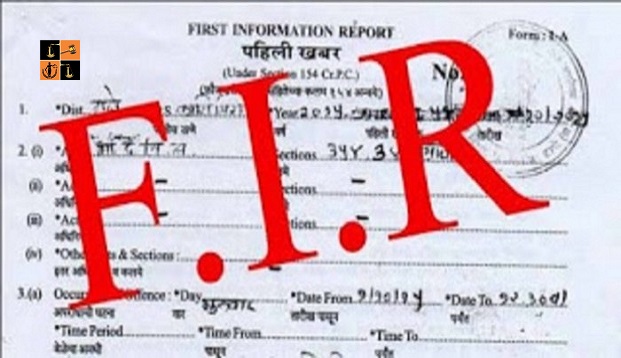
It was further pointed out that an aggrieved person may seek to put the criminal law in motion either by making a charge or in the language of the Code giving information to the Police (Section 154 CrPC) "or he may" lay a charge, or as the Code calls it, a complaint (Section 190 CrPC) before a Magistrate”
The Court mentioned Santokh Singh Vs. Izhar Hussain & ANR, 1973 Latest Caselaw 96 SC in which essential to be satiated in order to attract the offence under Section 211 of the IPC was elucidated.
According to the above, essential ingredient of an offence under Section 211 IPC is to institute or cause, to be instituted any criminal proceeding against a person with intent to cause him injury or with similar intent to falsely charge any person with having committed an offence, knowing that there is no just or lawful ground for such proceeding or charge. Instituting or causing to institute false criminal proceedings assume false charge but false charge may be preferred even when no criminal proceedings result.
"The false charge must, therefore, be made initially to a person in authority or to someone who is in a position to get the offender punished by appropriate proceedings. In other words, it must be’ embodied either in a complaint or in a report of a cognizable offence to the police officer or to an officer having authority over the person against whom the allegations are made. The statement in order to constitute the “charges” should be made with the intention and object of setting criminal law in motion."
In regard to above, the Court also analysed the ambit of 'Perjury' and charging the Prosecution with the same.
It referred to Chajoo Ram Vs. Radhey Shyam & ANR, 1971 Latest Caselaw 89 SC wherein it was held that giving of false evidence and filing false affidavits is an evil which must be effectively curbed with a strong hand but to start prosecution for perjury too readily and too frequently without due care and caution and on inconclusive and doubtful material defeats its very purpose.
"Prosecution should be ordered when it is considered expedient in the interests of justice to punish the delinquent and not merely because there is some inaccuracy in the statement which may be innocent or immaterial. There must be prima facie case of deliberate falsehood on a matter of substance and the court should be satisfied that there is reasonable foundation for the charge.”
It also mentioned Chandrapal Vs. State of Chhattisgarh (Earlier M.P.), 2022 Latest Caselaw 478 SC in which it was held that there must be grounds of a nature higher than mere surmise or suspicion for initiating perjury proceedings.
"There must be distinct evidence of the commission of an offence by such a person as mere suspicion cannot bring home the charge of perjury. More so, the court has also to determine as on facts, whether it is expedient in the interest of justice to inquire into the offence which appears to have been committed."
CASE TITLE: HIMANSHU KUMAR AND OTHERS versus STATE OF CHHATTISGARH AND OTHER
CASE DETAILS: WRIT PETITION (CRIMINAL) NO. 103 OF 2009
CORAM: Justice AM Khanwilkar and Justice JB Pardiwala
Read Judgement @LatestLaws.com:
Share this Document :Picture Source : https://miro.medium.com/max/700/1*smR6Qt26fhiJQB5LRfkWPw.jpeg




















