









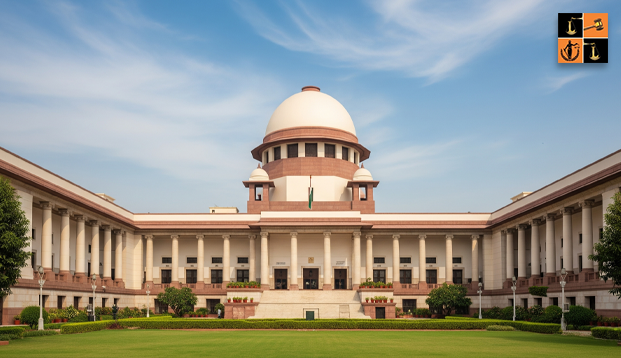
On Thursday, the Supreme Court raised a red flag over an emerging challenge at the crossroads of litigation and artificial intelligence, and this time, it’s not about AI assisting the justice system, but potentially misleading it. The Court has agreed to scrutinise a startling allegation that more than 100 case law citations placed before it may be entirely fictitious or AI-hallucinated, cautioning that serious consequences will follow if the claim turns out to be true. The message was unequivocal, the credibility of pleadings is non-negotiable, and trust is the bedrock of advocacy.
The case arose from insolvency proceedings against Gstaad Hotels Pvt Ltd, where a serious allegation surfaced regarding the authenticity of judicial citations. The controversy began when the opposing side claimed that a rejoinder filed by promoter Deepak Raheja relied on more than 100 judgments that did not exist at all. These citations, grouped under the title Deepak Raheja vs Omkara Asset Reconstruction, reportedly included even criminal law rulings presented as IBC precedents, raising the possibility that they were generated through AI prompts rather than derived from any genuine case law.
The dispute itself stemmed from a Section 7 insolvency petition admitted by the NCLT Mumbai in July 2025, on an application filed by Omkara Asset Reconstruction Pvt Ltd. The NCLAT later upheld this decision in August 2025, following which the promoters approached the Supreme Court. The underlying debt traces back to December 2017, when Piramal Capital & Housing Finance Ltd sanctioned a Rs. 450 crore term loan and a Rs. 50 crore credit facility to Gstaad Hotels, along with Rs. 100 crore to Neo Capricorn Plaza Pvt Ltd. Both companies subsequently availed credit under the Emergency Credit Line Guarantee Scheme. In December 2022, the debt was assigned to Omkara, which soon thereafter issued recall notices in February 2023, demanding Rs. 666.53 crore from Gstaad Hotels and Rs. 119.99 crore from Neo Capricorn.
Before the NCLAT, Raheja had argued that no default existed as of November 2022, claiming that withdrawals from the retention account distorted liability calculations and that undisbursed DSRA amounts should have been considered. He also pointed to the profitability of the assets and relied on earlier remand directions, which he said prevented adverse findings.
Senior Advocate Neeraj Kishan Kaul, appearing for Omkara, countered these submissions with a serious accusation: the rejoinder relied on judgments that were “nonexistent”, misquoted facts, repeated the same ruling under different legal propositions, and relied on decisions that never addressed the issues cited. If true, the implications would extend far beyond this case, striking at the heart of legal research integrity in an era where AI tools are increasingly, but not always reliably, used by litigants.
The Division Bench of Justice Dipankar Datta and Justice Augustine George Masih remarked that the Court would “take the appellant to task” if the citations were found to be fabricated or AI-generated. Rather than brushing aside the claim, the Bench decided to verify it, emphasising the judicial concern surrounding the misuse of AI in court filings.
The Apex Court has now directed a focused examination of the alleged fabricated citations, even as the insolvency appeal continues separately on merits. The matter will be taken up again on December 8, 2025.
Disclaimer: This news/ article includes information received via a syndicated news feed. The original rights remain with the respective publisher.
Picture Source :




















