









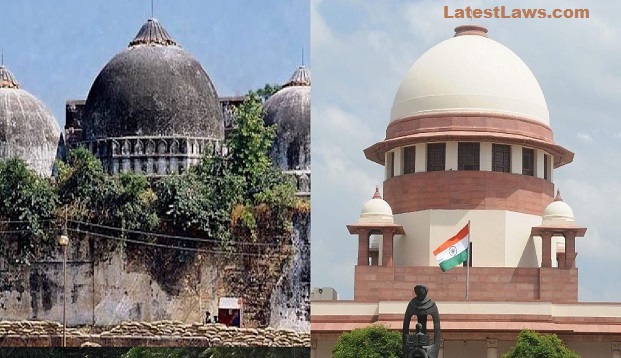
The Supreme Court has dismissed petition filed seeking to quash constitution of Indo Islamic Cultural Foundation Trust formed by Uttar Pradesh Sunni Central Waqf Board for construction of mosque over the 5 acres land which was allotted by the State of UP to the Board pursuant to the Ayodhya judgment.
The Division Bench of Justice DY Chandrachud and Justice PS Narasimha was dealing with an SLP assailing Allahabad High Court's order refusing to grant the same relief.
In the impugned oder, the High Court held the writ petition filed as 'non-maintainable', The Counsel appearing for the Waqf Board had contended that though the petition was ostensibly filed in the public interest, the petitioner has not made due disclosure as required by sub-rule (3A) of Rule 1 of Chapter XXII of the Allahabad High Court Rules, 1952, which was amended in view of the judgment of the Supreme Court passed in the case of State of Uttaranchal Vs. Balwant Singh Chaufal & Ors., 2010 Latest Caselaw 70 SC
The Trust was formed when the Board passed a resolution for the constitution of a Trust for construction of a mosque, hospital, library, research center, community kitchen and museum, etc. over the land measuring 5 acres in complaince to the SC Judgement in M. SIDDIQ vs. MAHANT SURESH DAS, 2019 Latest Caselaw 1251 SC .
In the impugned order, the High Court called the PIL, frivolous and opined that that it is the duty of Courts to ensure that there is no personal gain, private motive and oblique notice behind filing of the PIL.
"In order to preserve the purity and sanctity of the PIL, the Courts must encourage genuine and bonafide PIL and effectively discourage and curb the PIL filed for extraneous considerations. It would also be appropriate for this Court to encourage the genuine PIL and discourage the PIL filed with oblique motives. The Courts should, prima facie, verify the credentials of the petitioner before entertaining a PIL. It is also well settled that the Courts before entertaining the PIL should ensure that the PIL is aimed at redressal of genuine public harm or public injury. The Court should also ensure that there is no personal gain, private motive or oblique motive behind filing the public interest litigation."
Read Allahabad High Court Order @LatestLaws.com:
Picture Source :




















