









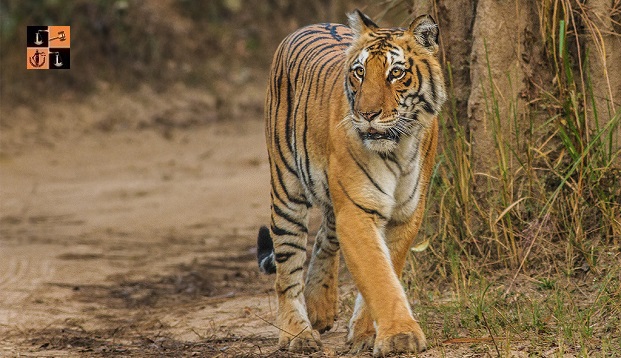
Recently, the Supreme Court formed a committee to resolve the issue of regulated car access for devotees visiting the Pandupol Hanuman Temple, situated within Rajasthan’s Sariska Tiger Reserve. The Court emphasised the need to balance environmental concerns with the religious sentiments of devotees, highlighting that while protecting the sanctuary is crucial, the concerns of the temple devotees must also be considered.
The case arose after a plea was filed by the Hunuman Temple Committee, requesting relaxation of restrictions on the entry of private vehicles into the Sarika Tiger Reserve. The temple is a significant religious site for many devotees, particularly on Tuesdays and Saturdays when large numbers come to offer prayers and perform rituals. The committee expressed concerns that a complete ban on private vehicles would prevent thousands of devotees from accessing the temple, thus affecting their religious practices, including offering Prasad as part of their prayers.
In response, the Apex Court constituted a committee consisting of the District Collector of Sariska, the Field Director of Project Tiger, and a member of the Central Empowered Committee (CEC) to examine the matter. The committee’s task is to find a phased and balanced solution, taking into account the concerns of both environmentalists and devotees. The Court instructed that the committee also hear the temple trust representatives to arrive at an amicable and phased resolution. The matter was part of a batch of environmental cases under the broader context of In Re: TN Godavarman Thirumalpad, specifically concerning the Sariska tiger reserve. During previous hearings, the Court noted that the Rajasthan government had agreed to several suggestions proposed by the CEC, which included the introduction of electric shuttle services for devotees instead of private vehicle access. This measure was also supported by Amicus Curiae K Parameswar, who had suggested similar solutions during earlier hearings.
The Court acknowledged that the state had agreed to most of the CEC’s proposals but pointed out that the deadlines set for their implementation were not practical particularly as some had already passed. As a result, the Court allowed for an extension of the deadlines, giving the state additional time to implement the necessary measures. The Top Court directed the formation of a committee to explore and implement a balanced solution that accommodates both the protection of the tiger reserve and the religious practices of the devotees, with an extended timeline for the implementation of the CEC’s recommendations.
Picture Source :



















