









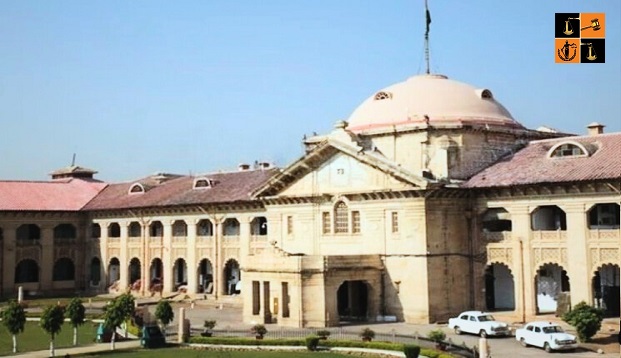
Recently, the Allahabad High Court refused to quash criminal proceedings in a case involving alleged fraudulent fee-inducement by an advocate, holding that acquittal in disciplinary proceedings is not an automatic ground to terminate a criminal trial. The matter arose from a complaint alleging that the advocate received money on the pretext of securing a favourable order. The Court underscored that criminal and disciplinary proceedings are independent in nature, and noted that disputed factual issues must be tested at trial, not under Section 482 Cr.P.C.
The complainant alleged that an advocate received money as legal fees promising a favourable judicial result. Upon disappointment, a complaint was initially filed before the Bar Council. The disciplinary committee first proceeded ex-parte and imposed suspension on the advocate, but upon recall and full hearing, the complaint was dismissed for lack of evidence. Later, the complainant instituted criminal proceedings under Section 420 IPC, leading to the advocate being summoned to face trial.
The applicant contended that the criminal case was a misuse of judicial process, particularly after the Bar Council had exonerated him, asserting that the complaint lacked essential ingredients of cheating and was driven by mala fide motives. It was argued that the dispute was civil in nature and the summoning order was therefore illegal.
The State opposed the plea, asserting that the Magistrate had duly considered available witness statements and that sufficient material existed to proceed with trial. No error or perversity was shown warranting interference.
The Court noted that disciplinary and criminal proceedings function on separate principles and objectives. It observed, "An acquittal in a disciplinary proceeding is not automatically a ground to quash a criminal proceeding. Criminal proceedings and disciplinary proceedings are distinct and can run simultaneously as they have different objectives, procedures, and standards of proof." The Bench further emphasized that quashing under Section 482 Cr.P.C. is permissible only in rare and narrow circumstances, such as lack of offence disclosure or abuse of process. On facts, the Court found disputed questions that could not be adjudicated without evidence.
It was also observed, "At this stage, only prima facie case is to be seen… It is only after the evidence and trial, it can be seen whether the offence, as alleged, has been committed or not."
Holding that prima facie material existed and the proceedings were not excludable solely on the basis of Bar Council adjudication, the Court dismissed the application and declined to quash the summoning order or the criminal case.
Case Title: Yogesh Kumar Bhentwal Vs. State of U.P. and Another
Case No.: Application U/S 482 No. - 12981 of 2018
Coram: Justice Jai Prakash Tiwari
Advocate for Petitioner: Adv. Shashank Maurya
Advocate for Respondent: Adv. G.A., Manvendra Nath Singh
Read Judgment @Latestlaws.com
Picture Source :



















