









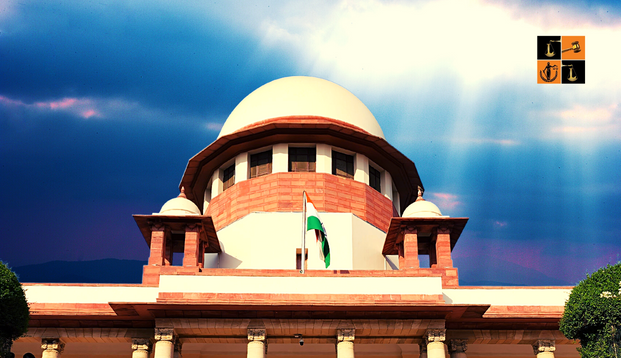
The Supreme Court, while examining the recurring issue of air pollution in Delhi-NCR, signaled its intent to consider criminal liability for farmers involved in stubble burning. A Bench led by Chief Justice of India B.R. Gavai, along with Justice K. Vinod Chandran, observed that prosecuting offenders could serve as a strong deterrent against the practice, which is a major contributor to deteriorating winter air quality.
During the hearing, Additional Solicitor General Aishwarya Bhati, representing the Union, explained that while the Commission for Air Quality Management (CAQM) Act prescribes penal measures against negligent officers, the Environment Protection Act does not provide explicit provisions targeting agriculturists engaging in stubble burning. The CJI remarked that expecting individual officers to monitor vast rural stretches was impractical, emphasizing that penal sanctions against farmers themselves could send “the right message.”
Senior Advocate Rahul Mehra, appearing for the State of Punjab, cautioned that criminal prosecution of small-scale farmers would be counterproductive, as their families’ livelihoods depend entirely on subsistence farming. He explained that Punjab already employs a “red entry” mechanism, barring offending farmers from accessing grain markets and digital platforms, which he argued serves as a more effective deterrent than arrests. Mehra stressed that while large landholders could face stricter penalties, punishing marginal farmers would disproportionately harm their dependents.
The Court, however, acknowledged the delicate balance involved. CJI Gavai noted, “Farmers occupy a special place in society because their work sustains us, but that cannot justify overlooking practices that endanger the environment. If necessary, we will issue a mandamus to ensure accountability". The Bench urged the Centre to deliberate with all stakeholders before it considers judicial directions.
The Court clarified that it was not advocating routine arrests but underscored that selective enforcement could prevent violations. Senior Advocate Aparajita Singh, acting as amicus curiae, further informed the Bench that delayed paddy sowing, introduced to conserve groundwater, had compressed the harvesting window, compelling farmers to burn crop residue for quicker turnaround.
Taking note of submissions, the Bench adjourned the matter after directing the Union to file a comprehensive status report. The case will be taken up for further consideration in the coming weeks.
Picture Source :




















