









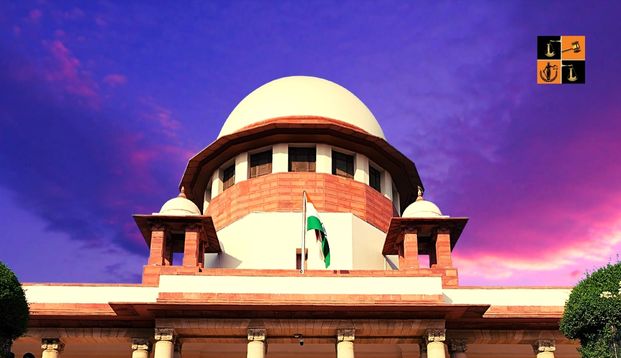
The Supreme Court urged the Election Commission of India (ECI) to incorporate Aadhaar and Electoral Photo Identity Card (EPIC) in the list of acceptable identification documents for voter verification under the ongoing Special Intensive Revision (SIR) of electoral rolls in Bihar. The Court emphasized that exclusion of these widely used identity documents undermines the principle of mass inclusion and observed, “Any of the documents can be forged; that cannot be the basis for exclusion. The aim should be inclusion, not exclusion.”
The present matter arises from a batch of petitions filed before the Supreme Court challenging the ECI’s directive dated June 24, which initiated a Special Intensive Revision (SIR) of the electoral rolls in Bihar. The petitioners, including the Association of Democratic Reforms (ADR), contended that the directive deviates from the procedure laid down under the Representation of the People Act, 1950, and the Registration of Electors Rules, 1960. It was further argued that the directive violated constitutional guarantees under Articles 14, 19, 21, 325, and 326 by arbitrarily excluding certain valid forms of identification.
Senior Advocate Gopal Sankaranarayanan, appearing for ADR, contended that the ECI’s exclusion of Aadhaar and EPIC for voter verification lacked justification and sought a stay on the finalization of the electoral rolls pending judicial review. It was argued that these two documents are central to identity verification in India and that their exclusion could result in large-scale disenfranchisement. The petitioners maintained that such exclusion defeats the constitutional ethos of fair and inclusive elections.
Representing the ECI, Senior Advocate Rakesh Dwivedi defended the directive, asserting that the Commission was acting within its constitutional mandate under Article 324 and the statutory authority of Section 21(3) of the Representation of the People Act, 1950. He justified the exclusion by pointing out that documents like Aadhaar and EPIC could also be obtained through fraudulent means, and that ration cards in particular were unreliable due to widespread misuse. He clarified that Aadhaar was being accepted, but only when supported by another identification document.
A Bench comprising Justice Surya Kant and Justice Joymalya Bagchi expressed concern over the selective exclusion of Aadhaar and EPIC from the list of accepted documents. Justice Kant questioned the rationale, stating, “Include these two documents. Tomorrow, any of the 11 documents may be forged. But that is not the issue. We are concerned with mass exclusion. It should be mass inclusion.”
Justice Bagchi added, “Suppose someone uploads a form with Aadhaar, why will you not include it in the draft? Why discriminate only against EPIC and Aadhaar when all documents are potentially forgeable?”
The Court made it clear that while it would not stay the finalization of the electoral rolls at this stage, it retains the power to intervene later if irregularities are found. Justice Kant firmly stated, “It does not take away our power. Trust us. As soon as we find something wrong, we will quash everything. Be ready.”
Additionally, the Court directed the counsels to submit a schedule for arguments, as the Bench was required to attend a meeting with the Chief Justice of India.
The matter was not adjudicated on merits due to time constraints, but the Court issued an oral direction to the ECI to include Aadhaar and EPIC in the acceptable list of documents for the Special Intensive Revision. The matter is to be listed again after counsels submit a timeline for completing submissions.
Picture Source :



















