









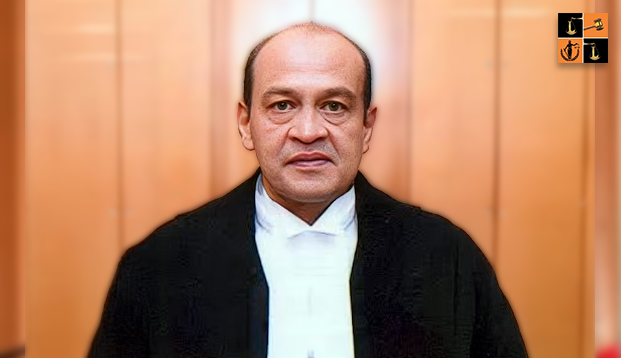
Recently, the Allahabad High Court was seized with a Public Interest Litigation (PIL) seeking to prevent the administration of oath to Justice Yashwant Varma, who was recently transferred from the Delhi High Court. The petition challenged the legality of his transfer and subsequent oath-taking, citing an ongoing in-house inquiry against him concerning the alleged possession of unaccounted cash. The Court was urged to intervene, given the constitutional implications surrounding the matter.
The petition, filed by advocate Vikash Chaturvedi through advocate Ashok Pandey, contended that Justice Varma’s transfer and proposed oath-taking contravened constitutional principles. It was argued that since Chief Justice of India (CJI) Sanjiv Khanna had directed the Chief Justice of the High Court not to assign any judicial work to Justice Varma, the very purpose of administering the oath became questionable.
The petitioner emphasized that a judge, upon taking oath, undertakes to faithfully discharge the duties of the office. However, if Justice Varma is to be deprived of judicial responsibilities post-oath, the constitutional sanctity of the process would be undermined. It was further contended that unless a judge is formally removed by an order of the President, judicial work cannot be withheld.
Additionally, the plea pointed out that the Chief Justice of a High Court, as the master of the roster, has exclusive authority to allocate work among judges. Therefore, it was asserted that the Chief Justice of India does not possess the power to interfere in this aspect. The petitioner also sought the quashing of Justice Varma’s transfer from Delhi to Allahabad.
The backdrop of the controversy stems from an incident on March 14, when a fire broke out at Justice Varma’s residence, reportedly leading to the discovery of unaccounted cash by firefighters. Subsequent reports indicated that a video of the charred currency was shared by the Delhi Police Commissioner with the Chief Justice of the High Court. At the time of the incident, Justice Varma and his wife were away in Madhya Pradesh, while his daughter and elderly mother were at home.
Following these developments, on March 21, the Chief Justice of India initiated an in-house inquiry and constituted a three-member committee to investigate the matter. The Supreme Court also made public a report by the Delhi High Court Chief Justice on the incident, along with Justice Varma’s response. Subsequently, on March 24, the Supreme Court Collegium recommended his transfer, which was officially notified by the Central Government on March 28.
The Apex Court also directed the Chief Justice of the Allahabad High Court not to assign any judicial work to Justice Varma. In light of these circumstances, the PIL sought judicial intervention to clarify the constitutional validity of the transfer and oath-taking in the absence of an active judicial role for the concerned judge.
Picture Source :




















