









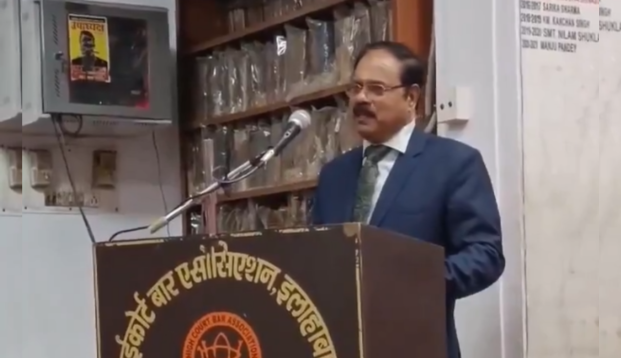
A motion to impeach Justice Shekhar Kumar Yadav of the Allahabad High Court has been submitted by 55 Rajya Sabha members from various Opposition parties. The motion, led by Independent MP Kapil Sibal, accuses the judge of making "hate speech" and inciting "communal disharmony" during a recent event organized by the Vishwa Hindu Parishad (VHP) in Prayagraj. The signatories of the motion include prominent leaders such as Congress leaders P. Chidambaram, Digvijaya Singh, Jairam Ramesh, and Vivek Tankha, as well as AAP’s Sanjay Singh and TMC’s Saket Gokhale, among others.
The impeachment motion outlines three primary allegations against Justice Yadav. First, the MPs accuse the judge of engaging in hate speech and inciting communal disharmony, arguing that his comments targeted minority communities and displayed clear bias, violating constitutional provisions that promote harmony and secularism. Secondly, the petition asserts that Justice Yadav violated the Restatement of Values of Judicial Life – 1997 by publicly commenting on politically sensitive matters, particularly the Uniform Civil Code, thus breaching the expected impartiality of judicial officers. Lastly, the MPs argue that his remarks undermined the secular ethos of India’s Constitution by fostering division and prejudice.
Among the controversial statements cited in the petition, Justice Yadav was quoted saying, “This is Hindustan… and the country will run according to the majority who live in Hindustan.” The MPs contend that such remarks directly challenge India’s secular framework and undermine its inclusive democratic values. Additionally, his comments about the Muslim community, including critiques of polygamy and animal slaughter, were deemed inflammatory. The MPs argue that such remarks not only display prejudice but also raise concerns about his ability to impartially adjudicate cases involving minority communities.
The motion was filed under Section 3(1)(B) of The Judges (Inquiry) Act, 1968, and seeks action under Articles 124(4) and 124(5) of the Constitution. To proceed, the motion needs approval from a majority of Rajya Sabha members. The petition includes video clips and transcripts of Justice Yadav's controversial speech to support the allegations.
Should the motion be accepted, a three-member inquiry committee will be formed to investigate the allegations. This committee will consist of two judges and a jurist who will assess whether the charges are substantial enough to initiate impeachment proceedings. If the motion is to succeed, it must receive support from a majority of the members present and voting, with at least two-thirds of the votes in favor.
Impeachment motions against judges have historically faced significant challenges. Notably, a 2018 attempt to impeach then-Chief Justice Dipak Misra did not succeed in clearing the entire process. This latest move against Justice Yadav has reignited debates about the balance between judicial independence and public accountability.
Meanwhile, the Supreme Court has taken notice of the controversy and has requested a report from the Allahabad High Court regarding Justice Yadav's speech. The outcome of this motion will likely have a lasting impact on the discourse surrounding judicial ethics, political neutrality, and the role of the judiciary in preserving national unity.
Picture Source :



















