









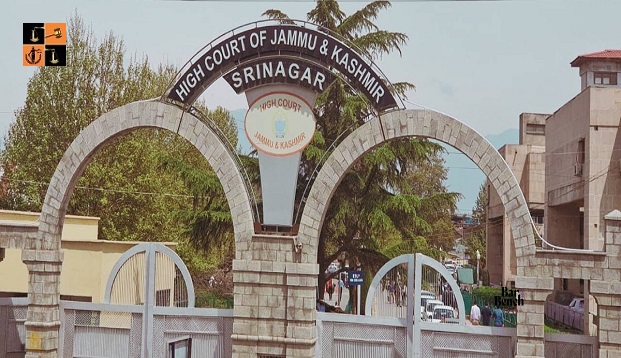
Recently, in a detailed examination of the statutory ingredients underpinning offences under Section 354 and Section 448 of the Indian Penal Code, the High Court of Jammu & Kashmir held that the falling of a woman’s headgear during a family dispute, absent any intention to violate her dignity, does not constitute outraging modesty. Justice Sanjay Dhar clarified that penal consequences under Section 354 arise only when criminal force is accompanied by a specific intent or knowledge that modesty is likely to be affronted.
The case arose from an FIR registered on a complaint lodged by the petitioner’s sister-in-law. She alleged that in August 2021, the petitioners entered her home, assaulted her and her husband, and dragged her during the altercation, resulting in the fall of her headgear. This dislodging of the headgear was cited as an act amounting to outraging modesty. The FIR also invoked Section 448 of the IPC on allegations of forcible entry into the complainant’s premises. The petitioners maintained that a long-standing civil dispute over co-owned property was being given a criminal complexion, and pointed to ongoing civil litigation and orders of status quo passed earlier by the civil court.
The Petitioners contended that the FIR was a retaliatory move in an ongoing property dispute and that none of the allegations fulfilled the statutory ingredients of the offences invoked. They submitted that they were joint owners and co-sharers of the property, and therefore, their entry into the premises could not constitute criminal trespass. It was further urged that the complainant had attempted to convert a purely civil disagreement into criminal litigation to exert undue pressure.
On the other hand, the State argued that during the course of investigation, the allegations levelled in the FIR stood established, leading to the preparation of a charge sheet. It maintained that the statements recorded under Section 164 of the CrPC supported the complainant’s version and justified continuation of prosecution.
Justice Sanjay Dhar observed that, “Mere assault or use of criminal force to a woman simplicitor, without there being any intention on the part of the accused to outrage the modesty of the victim, would not fall within the definition of the offence punishable under Section 354 of the IPC. An assault or use of criminal force to a woman simplicitor unaccompanied by a state of mind to outrage modesty of such woman cannot be termed as an offence under Section 354 of IPC.”
On the specific allegation that the complainant’s headgear fell off when she was dragged, the Court observed that there was no material to suggest intent to outrage her modesty. The close familial relationship between the parties reinforced this inference.
On the allegation of criminal trespass, the Court noted that Section 448 of the IPC requires proof that the complainant was in exclusive possession of the property. The Court found no such material, noting the longstanding civil dispute and the status quo orders, and held that the matter was essentially civil in nature. It further remarked that the complainant had sought to “settle a civil dispute… by giving it a criminal colour.”
In light of the foregoing discussion, the Court held that neither the allegations in the FIR nor the material collected during the investigation disclosed the commission of any cognizable offence against the petitioners. It concluded that continuation of the criminal proceedings would constitute an abuse of process. Accordingly, the Court quashed the FIR and all proceedings emanating from it.
Case Title: Mushtaq Ahmad Shah & Ors. v. UT of J&K & Ors.
Case No.: CRM(M) No. 182 of 2022
Coram: Hon’ble Mr. Justice Sanjay Dhar
Advocate for the Petitioners: Adv. Naveed Gul
Advocate for the Respondents: Government Advocate Ilyas Nazir Laway, Assisting Counsel Maha Majeed
Read Judgment @Latestlaws.com
Picture Source : twitter.com




















