









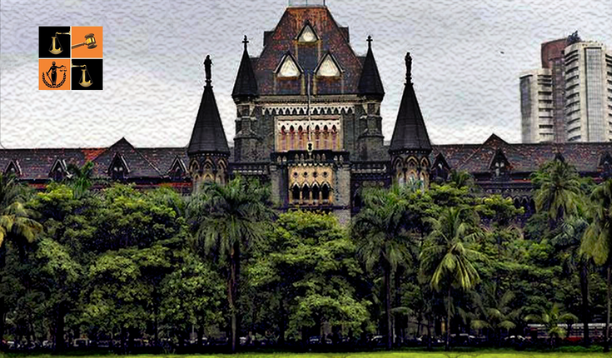
The Bombay High Court recently comprising of a bench of Justices Ujjal Bhuyan and Milind N Jadhav, observed that section 11BB of Central Excise Tax does not distinguish between intentional and unintentional delay. (Qualcomm India Private Limited Vs. Union of India and others)
The bench observed that once there is delay in payment of refund within three months from the date of receipt of application, rigour of section 11BB sets in and payment of interest on the delayed refund becomes obligatory. It follows automatically; as a matter of law being a mandate of the statute.
Facts of the Case
Petitioner is a company incorporated under the Companies Act, 1956 having its registered office at Bandra Kurla Complex, Mumbai. Petitioner is engaged in the business of providing support services primarily to its foreign affiliates. It was stated that services provided by the petitioner qualified as export of service under the erstwhile Export of Service Rules, 2006 as well as under rule 6A of the Service Tax Rules, 1994 read with rule 3 of the Place of Provision of Services Rules, 2012. Hence, petitioner did not pay any service tax on the output services so exported. This resulted into accumulation of CENVAT credit of service tax paid on input services. Several show cause notices were issued to the petitioner by the Assistant Commissioner i.e., respondent No.3 to show cause as to why the refund claims of the petitioner should not be rejected primarily on the ground that the input services did not have any nexus with the output services and thus were not eligible for refund. Responding to such show cause notices, petitioner submitted detailed replies enclosing therewith the requisite documents. Refund sanctioning authority passed orders in original in respect of the refund claims made by the petitioner partially sanctioning the refund amount and partially rejecting the refund amount. Against the orders partially rejecting the refund claim, petitioner preferred appeals before the appellate authority. Learned counsel for the respondent stated that there was no intentional delay in granting the refund to the petitioner. Therefore, question of payment of interest would not arise. As such, the writ petition should be dismissed.
This petition was filed under Article 226 of the Constitution of India, the petitioner sought a direction to the respondents to forthwith grant and sanction interest on the refund amount after expiry of three months from the respective dates of application till the date of actual refund under section 11BB of the Central Excise Act, 1944 read with section 83 of the Finance Act, 1994.
Contention of the Parties
Mr. Shah, learned counsel for the petitioner has asserted that payment of interest under section 11BB of the Central Excise Act, 1944 is mandatory in all the 19 refund applications filed by the petitioner as the refund claims were allowed much after three months of receipt of the applications. Therefore, under section 11BB of the Central Excise Act, 1944 as made applicable to service tax vide section 83 of the Finance Act, 1994, petitioner is entitled to interest as a matter of right for such delayed payment of refund. There is no question as to whether the delay caused in refund is intentional or not intentional. Besides referring to sections 11B and 11BB of the Central Excise Act, 1944 and circular dated 01.10.2002 of the Central Board of Excise and Customs, Mr. Shah has placed reliance on a number of decisions which he has furnished by way of a compilation.
On the other hand, Mr. Walve, learned counsel for the respondents has reiterated the averments made in the reply affidavit filed on behalf of respondent Nos.2 and 3 and asserts that there was no intentional delay in granting the refund to the petitioner. Therefore, question of payment of interest would not arise. As such, the writ petition should be dismissed.
Courts Observation & Judgment
The Court referred to the case of Amalgamated Plantations (P) Limited Vs. Union of India, 2013 (296) ELT 13 wherein the Court in order to examine the question as to entitlement of the petitioners to interest under section 11BB of the Central Excise Act on delayed excise duty refund by the department to the petitioners. From a conjoint reading of sections 11B and 11BB of the Central Excise Act it was held that if any refund of excise duty is ordered under section 11B(2), the same has to be refunded within three months from the date of receipt of application under sub-section (1) of section 11B failing which interest would have to be paid. Language of section 11B is very clear and unambiguous. It speaks of claiming refund of any duty of excise. No exception is provided. It does not distinguish or differentiate between any kind of excise duty refund, whether duty paid in excess or duty paid which are exempted.
The Court noted, “thus what can be culled out from the above is that if an application for refund is made, the same is required to be adjudicated within three months of receipt of the application. But if the refund is granted after three months of receipt of the application, then the applicant would be entitled to interest on such delayed refund as a matter of right. The interest would cover the period from the date immediately after expiry of the period of three months from the date of receipt of the application till the date of payment of the refund.”
The Court upon considering the aforesaid facts, upheld the petition and stated that: Section 11BB does not distinguish delay which is intentional and delay which is unintentional. Once there is delay in payment of refund within three months from the date of receipt of application, rigour of section 11BB sets in and payment of interest on the delayed refund becomes obligatory. It follows automatically; as a matter of law being a mandate of the statute. Non-granting of interest in such a case would amount to failure to discharge statutory duty / obligation by the refund sanctioning authority for which the aggrieved claimant can seek a writ of mandamus from the Writ Court under Article 226 of the Indian Constitution. Thus in the light of the discussions made above, the writ petition succeeds. Petitioner would be entitled to interest under section 11BB of the Central Excise Act, 1944 on the amounts refunded to it. Respondent Nos.2 and 3 shall work out the interest amount payable to the petitioner in respect of the refund claims for the relevant periods which shall be paid to the petitioner within three months from the date of receipt of a copy of this judgment and order.”
Read Judgment @Latestlaws.com
Share this Document :Picture Source :



















