









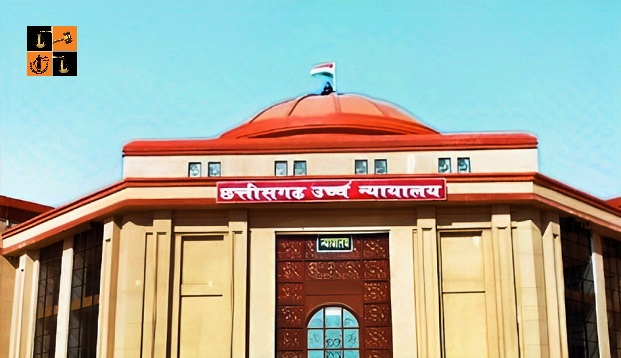
In a significant intervention touching upon the intersection of tribal identity and codified personal laws, the Chhattisgarh High Court stepped in to scrutinize a Family Court ruling that had blocked a couple’s plea for mutual divorce under the Hindu Marriage Act, 1955. The dispute arose after the Family Court at Jagdalpur declined to entertain their petition under Section 13B on the ground that one spouse belonged to a Scheduled Tribe, thereby allegedly attracting the exclusion under Section 2(2) of the statute. The High Court was thus called upon to examine whether members of Scheduled Tribes who voluntarily follow Hindu customs can still invoke remedies under the Act.
The controversy began when the couple, married in 2009 according to Hindu rites including the ceremony of saptpadi, approached the Family Court seeking dissolution of their marriage by mutual consent. The spouses had been living separately since 2014 and jointly moved an application under Section 13B of the Act. However, the Family Court rejected the plea outright, holding that since the husband belonged to a Scheduled Tribe, the provisions of the Hindu Marriage Act would not apply by virtue of Section 2(2).
Challenging this decision, counsel for the appellants argued before the High Court that the parties had consciously adopted Hindu customs and traditions, effectively becoming “Hinduised.” Relying on the Supreme Court ruling in Labishwar Manjhi v. Pran Manjhi and a judgment of the Delhi High Court in Ajmera Ramulu v. B Chandrakala, it was contended that the Family Court erred in rejecting the petition without examining the merits.
The High Court agreed, emphasizing that the exclusion under Section 2(2) exists to protect tribal customs, not to prevent individuals from opting into codified personal laws when they themselves follow Hindu traditions. Referring to the Supreme Court’s ruling in Labishwar Manjhi, the Bench noted that when evidence shows that tribal parties have adopted Hindu customs, statutory provisions under Hindu law can apply to them. The Court underscored this principle, observing that “when members of a tribe voluntarily choose to follow Hindu customs, traditions and rites, they cannot be kept out of the purview of the provisions of the Act of 1955.”
It further clarified that “Section 2(2) of the Act of 1955 is a measure of protection and cannot by any stretch of imagination be called as a measure of exclusion.” Finding the Family Court’s approach legally flawed, the High Court set aside the impugned order and remitted the matter for fresh consideration of the mutual divorce plea on merits.
Case Title: Smt. Gudiya Nagesh And Anr.
Case No.: Fa(Mat) No. 344 Of 2025
Coram: Hon'ble Justice Sanjay K. Agrawal, Hon'ble Justice Arvind Kumar Verma,
Advocate for the Petitioner: Adv. Ishan Verma
Amicus Curiae: Manoj Paranjpe (Senior Advocate), Kabeer Kalwani
Read Judgment @Latestlaws.com
Picture Source :



















