









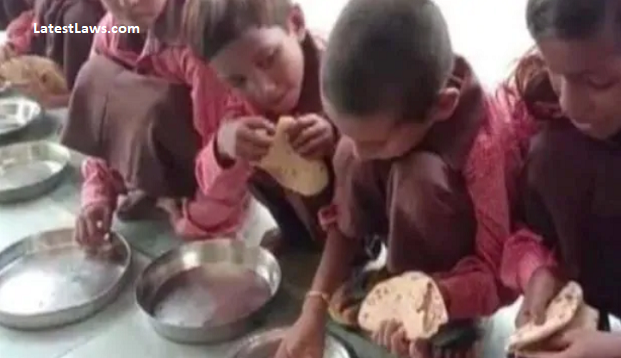
The Patna High Court recently took Suo moto cognizance on a news report that provided that in the midst of the pandemic when the schools are shut, the children in Bihar are deprived of the mid-day meal schemes. The report further mentioned that due to this, children have been selling scraps to earn income.
The court had issued a notice with regards to this question where mainly two questions of prime importance were to be addressed:-
- Whether the State is fulfilling its statutory and constitutional mandate of providing food and nutritional security to children who have been adversely impacted by the closure of schools and Anganwadi centres due to the Covid19?
- What measures can be undertaken to ensure that the right to education of children in the State is not adversely impacted during this time, and to prevent school children from indulging in begging and garbage collection?
The court had earlier stated that the government under Article 47 had an obligation to raise the level of nutrition and standards of living of its people and improve public health. Furthermore, Section 5 of the National Food Security Act 2013 provided for nutritional support to children by way of meals at Anganwadi centres and schools run by the Government.
Court’s Observation on Child’s Right to food in COVID-19
The Court observed that in 1995 the Mid-day meal scheme was started at the pan-India level with an aim to increase nutrition level in children and also to increase enrolment of students in schools. Right to life in Article 21 of the Constitution, envisages within its domain a person’s right to food and their right to live with dignity without hunger. Reliance was also made on Article 25 of the Universal Declaration of Human Rights (UDHR) and Article 11 of the International Covenant on Economic, Social, and Cultural Rights (ICESCR) which stated similar aspects and India being a signatory to the conventions, is obligated to undertake the provisions in a full and efficient manner. Thus, it is not only a moral but also a legal obligation to provide the same.
Section 39 of the National Food Security Act, 2013 read with Rule 9(1) of the Mid-day Meal Rules, 2015 provides that the State Government shall pay to every child, Food Security Allowance by way of bank transfer into the accounts of parents. This was undertaken by the state government during march and July and was seen as a positive step.
Court’s observation on Right to education in COVID-19
Due to the ensuing pandemic and lack of income children are forced into begging and garbage collection. The court thus, highlighted the importance of education however they did not endorse the reopening. Reliance was made on Article 26 of the Universal Declaration of Human Rights, Article 4 of the United Nations Educational, Scientific and Cultural Organization (UNESCO), Convention against Discrimination in Education as well as Article 13(1) of the International Covenant of Economic Social and Cultural Rights. In the Indian context, the right to education is enshrined under Article 21 A, 41, and 45 of the Constitution.
The state claimed that education was being imparted by television but the court was of the view that it was not enough. Highlighting the importance of the support system of BPL the court said that it must encompass educational needs as well and not the nutritional needs. The court was appalled at the sad state of affairs and even mentioned statistics to highlight the situation.
Court also appreciated the steps taken by countries like Bangladesh, to provide education to students while partnering with mobile companies. In respect of providing nutrition, the court pointed out the techniques of the UK.
Court’s Direction
The Court upon perusal directed the following things:-
- Continuance of mid-day meal to the extent possible
- Ensure benefits of the Food Security Act are provided
- Monitor the nutritional health of children by leveraging the reach of Anganwadi workers
- Promotion of digital lectures
- Enhance the role of Anganwadi and NGO workers in every district
- Emphasis on TV and radio to ensure education
- Use Telecom/digital infrastructure to mark the daily attendance of students
- Prevent drop out rate post-pandemic
- Workshops for teachers to deal with students post-pandemic
Case Details
Civil Writ Jurisdiction Case No.7124 of 2020
Coram- HONOURABLE THE CHIEF JUSTICE and HONOURABLE MR. JUSTICE S. KUMAR
Read directions @Latestlaws.com
Share this Document :
Picture Source :




















