









“The Courts interpret the laws enacted by the Legislature... but they do not encroach upon the domain of the Legislature by directing it to enact a law or to correct what they believe may be errors in such enacted law.” ~ HC
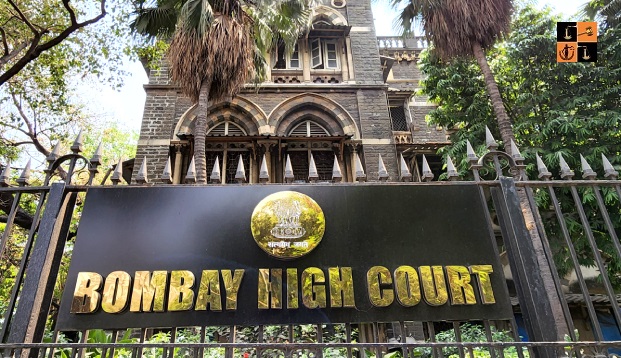
With this observation, the Bombay High Court has reaffirmed the constitutional limits of judicial review in matters concerning legislative competence and the temporal application of fiscal enactments. The decision came in a writ petition, seeking retrospective correction of what it termed a "clerical error" in the Customs Tariff under the Finance Act, 2022.
The Division Bench of Justice M.S. Sonak and Justice Jitendra Jain, while dismissing the petition, held that no writ can be issued directing the legislature or its delegates to retrospectively amend tax legislation, even where the changes are perceived as clarificatory.
The petitioner challenged the omission of tariff items under the Third Schedule of the Finance Act, 2022. While a prospective correction was made effective from 1 Febru ary 2025 or 1 May 2025, the petitioner contended that the omission was an “obvious” or “clerical error” and sought a direction to revise the applicable Basic Customs Duty (BCD) from 10% to 7.5% with retrospective effect from 1 May 2022.
The Court was also urged to issue a writ of mandamus compelling the Union of India to take a decision on the petitioner’s representation.
The Bench unequivocally rejected the plea for retrospective correction of the statute, while observing, “Normally, it is not for this Court to rule on what the Petitioner describes as errors, obvious errors or clerical errors in a legislative instrument.”
Reiterating the constitutional principle of separation of powers, the Court added, “The Courts interpret the laws enacted by the Legislature. They may, if a case is made out, strike down a law if it is ultra vires the Constitution. But they do not encroach upon the domain of the Legislature by directing it to enact a law or to correct what they believe may be errors in such enacted law.”
The petitioner’s reliance on subsequent legislative correction was also found to be misplaced. The Court clarified that “The circumstance that the legislature has intervened prospectively and brought about changes in the legislation is also no ground to presume that the legislature has accepted the position that there were errors in the unamended legislation.”
On the issue of whether such corrections can be presumed to be retrospective, the Court declined to adjudicate, noting that such arguments may be addressed before an appropriate forum but not in a writ petition of this nature.
The Court declined to issue a writ of mandamus. However, it requested the Union to consider and dispose of the petitioner’s original representation and a supplementary representation to be filed within two weeks.
The petition was accordingly disposed of without costs.
Case Title: Aarti Drugs Limited Vs. Union of India and Ors.
Case No.: Writ Petition (L) No. 31254 Of 2024
Coram: Justice Jitendra Jain and Justice M.S. Sonak
Advocate for Petitioner: Advs. Prasannan Namboodiri and Pallavi Dabak
Advocate for Respondent: Advs. Jitendra B Mishra, Sangeeta Yadav and Rupesh Dubey
Picture Source :




















