









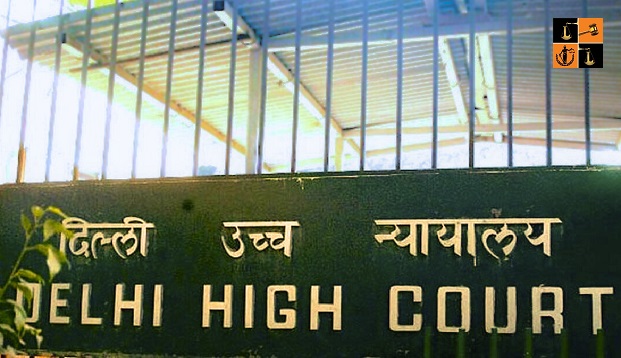
Recently, the Delhi High Court held that adjournments and pass overs are privileges extended by courts and not entitlements of counsel. Justice Girish Kathpalia, while upholding two trial court orders closing the plaintiff’s right to further cross-examine a defence witness, observed that repeated adjournments spanning several years and inconsistent explanations from counsel demonstrated a pattern of protraction incompatible with fair procedure.
The Case stemmed from a civil suit filed in 2006, now nearing conclusion before the trial court. During the evidence stage, the Court barred the plaintiff from continuing the cross-examination of the defence witness after noting that the earlier cost of Rs. 5,000, imposed when an adjournment was sought, had not been paid, nor had any request for its waiver been made. When the plaintiff later sought to have that order revisited, the trial court declined. Both orders were subsequently challenged before the High Court.
The Petitioner contended that he had only requested a brief pass over and was therefore deprived of a reasonable chance to continue the cross-examination of the defence witness. He maintained that the trial court should have accommodated the request to ensure a fair opportunity to complete the exercise.
In response, counsel for the defendants placed reliance on several previous orders of the trial court to show that the plaintiff had repeatedly sought adjournments. They argued that the suit, already pending for nearly twenty years, was being deliberately prolonged by the petitioner through such tactics.
Justice Girish Kathpalia recorded that the plaintiff’s narrative was inconsistent with the trial court record. The Court observed that the record made it evident that what had been sought was an adjournment rather than a mere pass over, and that the explanations offered on behalf of the plaintiff were inconsistent. It noted that the proxy counsel initially cited the main counsel’s illness as the reason for seeking time, but when asked to produce medical documents, he shifted to claiming a family emergency. The Court remarked that “such falsehood coming from a counsel before the trial court as well as this court is deprecated.”
The Court found that the plaintiff had sought adjournment or pass over on almost every hearing. Justice Kathpalia emphasised that “pass overs are matter of right of the counsel. That is not so. Adjournments and pass over are courtesies extended by the court to accommodate the counsel. But that cannot be allowed to make the opposite side suffer. It is for the counsel to maintain their diary so that the other side may not suffer.”
The Court also reviewed the sequence of events surrounding the defence witness’s testimony. It noted that although the witness’s examination had commenced long ago, the cross-examination had remained unfinished despite numerous opportunities afforded over an extended period. The Court recorded that the repeated requests for adjournments by the plaintiff were the reason the evidence phase had not progressed.
Holding that the trial court acted within its authority, the Court upheld both impugned orders. The Court noted that non-payment of imposed costs justified the closure of cross-examination under Section 35B of the Code of Civil Procedure and referenced the Supreme Court’s interpretation in Manohar Singh v. D.S. Sharma. The Court concluded that “I do not find any infirmity, much less perversity in the impugned orders, so both the impugned orders are upheld and the present petition is dismissed with cost of Rs.10,000/- to be paid by petitioner/plaintiff to respondents through respondent no.1 within two weeks.”
Case Title: M/s EC Constructions P Ltd v. Neeraj Zutshi and Anr
Case No.: CM(M) 1683/2025
Coram: Hon’ble Mr. Justice Girish Kathpalia
Advocate for the Petitioner: Adv. Prabhjyot Singh
Advocate for the Respondent: Advs. Sahil Gupta, and Arjun Aggarwal
Read Order @Latestlaws.com
Picture Source :




















