









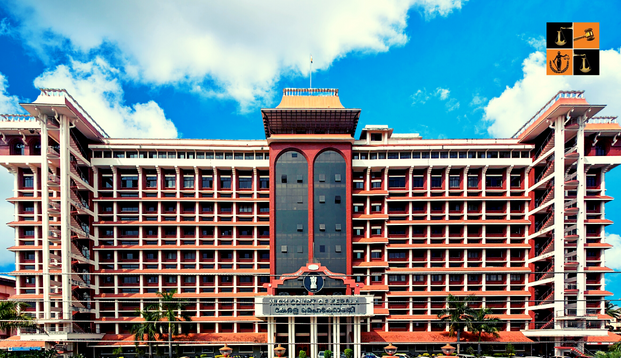
The Kerala High Court directed the Kerala State Electricity Regulatory Commission to conduct hybrid public hearings, both physical and online, while considering proposed amendments to the Renewable Energy Regulations. The Court emphasized that public participation must not be curtailed by limiting hearings to virtual mode alone and noted, “The Commission shall determine the venue and timings considering accessibility, convenience, safety, and sufficiency of facilities for participants.”
The matter arose from a public interest litigation (PIL) filed by the Domestic On-Grid Solar Power Prosumers Forum Kerala. The petitioner challenged the Commission’s decision to conduct hearings solely in online mode, alleging that the exclusion of physical hearings undermined public engagement and transparency. It was contended that during previous consultations regarding regulations and tariff proposals, physical hearings were conducted across multiple locations, and a similar practice must be continued.
The petitioner urged the Court to issue directions to the Commission to revert to the hybrid hearing model followed in earlier instances. It was argued that physical participation is essential for effective stakeholder involvement, particularly for individuals who may not have access to or familiarity with digital platforms.
A Division Bench comprising Chief Justice Nitin Jamdar and Justice Basant Balaji acknowledged the petitioner's concerns regarding accessibility and the importance of public participation in regulatory decision-making. The Court observed that the Commission must strive to fix the venue and time of hearings keeping in mind factors such as accessibility, convenience, safety, and adequacy of space.
The Court further directed that physical hearings should be organized in Kozhikode, Palakkad, Ernakulam, and Thiruvananthapuram, as had been done previously. In order to ensure orderly conduct during the physical hearings, the Bench permitted the Commission to seek assistance from law enforcement authorities. It noted, “Taking into account the observations made in this judgment, it shall be open to the Commission to approach the State Police Chief and City Police Commissioner for deployment of sufficient personnel to maintain order during public hearings at the designated locations.”
Additionally, the Court directed the Commission to frame and notify in advance a clear procedure regulating the conduct of the public hearings.
With the above directions, the High Court disposed of the PIL, reinforcing the significance of inclusive and transparent public consultation mechanisms in regulatory processes.
Picture Source :



















