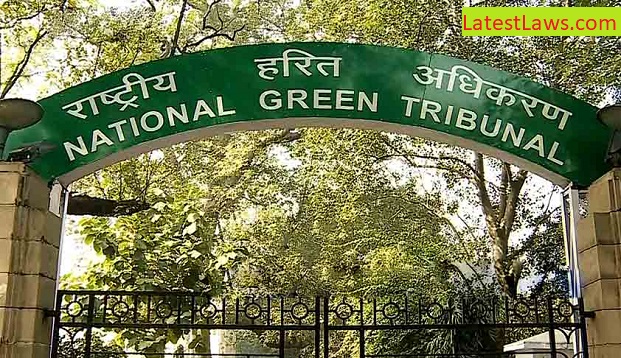
In a significant ruling clarifying the limits of environmental adjudication, the Supreme Court set aside an order of the National Green Tribunal (NGT) directing removal of an allegedly illegal temple constructed on park land in Ghaziabad, holding that such disputes fall outside the Tribunal’s jurisdiction. The decision draws a clear line between environmental issues and municipal law violations, reinforcing that unauthorized constructions must be dealt with by appropriate local authorities, not the NGT.
The dispute arose after a Residents Welfare Association approached the NGT seeking removal of a structure alleged to have been raised on land earmarked as open space. The Tribunal, invoking its powers, ordered demolition of the construction. This was challenged before the Supreme Court, where the appellants contended that the issue pertained purely to municipal and town planning violations, with no substantial environmental question involved. The challenge centered on whether the NGT could intervene in cases of encroachment not linked to environmental statutes.
The Court examined the scope of Section 14 of the NGT Act and emphasized that the Tribunal’s jurisdiction is confined to matters involving substantial environmental questions under specified laws. It observed that “the conditions precedent for empowering the Tribunal to exercise the jurisdiction… were not fulfilled” since the dispute related to alleged violations of municipal laws, not environmental statutes.
Holding that the NGT had overstepped its authority, the Court declared the impugned order to be without jurisdiction and set it aside, while granting liberty to the RWA to approach the appropriate authority.
Picture Source :