









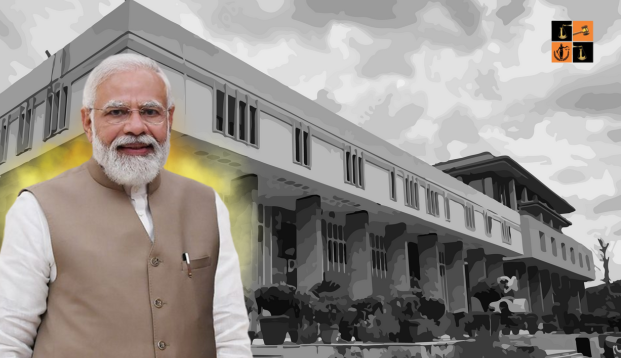
The Delhi High Court directed the Delhi University (DU) to submit its objections concerning the delay in filing a set of appeals seeking disclosure of information related to the Bachelor’s degree of Prime Minister Narendra Modi.
A Division Bench comprising Chief Justice Devendra Kumar Upadhyaya and Justice Tushar Rao Gedela, while hearing the matter, refrained from issuing formal notice but directed, “Objection to the application seeking condonation of delay may be filed within three weeks. Response, if any, be filed by the appellants within the following two weeks. List on January 16.”
The proceedings were marked by the appearance of Solicitor General of India Tushar Mehta representing the University.
The appeals have been moved by RTI activist Neeraj, Aam Aadmi Party leader Sanjay Singh, and Advocate Mohd. Irshad, challenging the order of a Single Judge dated August 25. The said order had set aside the Central Information Commission’s (CIC) direction compelling DU to disclose records concerning the 1978 Bachelor of Arts programme, the year in which the Prime Minister is stated to have completed his graduation.
The Single Judge had allowed DU’s plea filed in 2017, observing that an individual’s educational qualifications, including mark sheets, results, and degree certificates, constitute personal information exempt from disclosure under Section 8(1)(j) of the Right to Information Act, 2005. It was further held that merely holding a public office does not divest a person of their right to privacy regarding personal educational details.
The controversy originated when RTI activist Neeraj Kumar sought information regarding all students who appeared for the BA examination in 1978, including their roll numbers, marks, and results. The Central Public Information Officer of DU denied the request, classifying it as third-party information under the RTI framework.
Upon appeal, the CIC, in its 2016 decision, had directed the University to disclose the requested information, holding that details related to students’ educational qualifications fall within the public domain since universities are public authorities maintaining such records. However, DU challenged the CIC’s directive before the Delhi High Court, which stayed the order on January 24, 2017.
The matter will now be taken up on January 16, when the Court is expected to examine DU’s objections and the appellants’ response on the delay in filing the appeals.
Picture Source :



















