









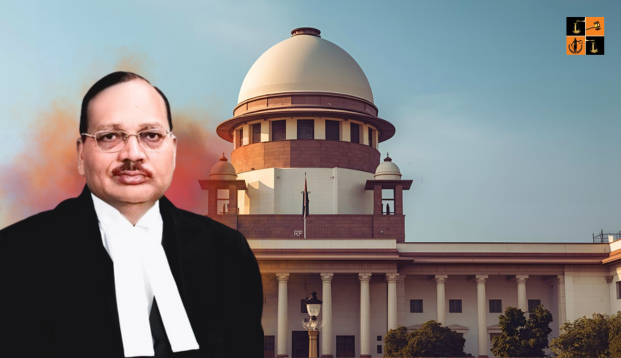
On Friday, the Supreme Court, while hearing a plea concerning the practice of police uploading images of accused persons on social media, took note of concerns over the conduct of certain digital platforms, with Chief Justice of India Surya Kant agreeing with the Solicitor General’s submission that some platforms operate in a “blackmailing” manner and observing that such actions resemble a form of “digital arrest.”
The Bench, comprising CJI Surya Kant, Justice Joymalya Bagchi and Justice Vipul Pancholi, was examining a plea challenging the practice of police authorities uploading photographs of accused individuals, often in degrading conditions, on official social media handles. Senior Advocate Gopal Sankaranarayanan argued that such public exposure not only humiliates the accused but also fosters prejudice, effectively turning public opinion against them before trial. Solicitor General Tushar Mehta drew a distinction between mainstream media and the largely unregulated digital ecosystem, cautioning that anyone with a smartphone now functions as a publisher, with certain virtual platforms allegedly thriving on coercive or exploitative content.
The CJI observed that such conduct mirrors coercive confinement in the digital sphere, remarking, “It is some form of a digital arrest only. Unfortunately, it is not an offence.” The Court highlighted the alarming rise of insensitive online behaviour, noting instances where individuals prioritise recording incidents over offering assistance. While acknowledging the need for regulatory intervention, the Bench refrained from issuing immediate directions, instead pointing to its earlier order requiring States to frame guidelines governing police-media interactions. The petitioner was granted liberty to amend the plea after reviewing the forthcoming framework.
Disclaimer: This news/ article includes information received via a syndicated news feed. The original rights remain with the respective publisher.
Picture Source :



















