









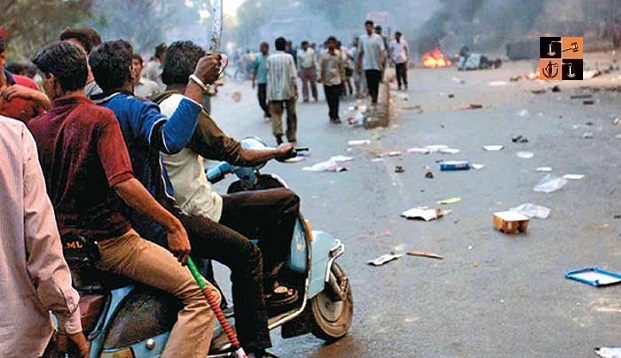
A Sessions Court in Halol, Gujarat, has acquitted 35 Hindus who were accused in four cases related to the Gujarat genocide of 2002. The court's order, issued on June 12 and made available on June 15, also criticized the "pseudo-secular media and politicians" for spreading claims that the riots were planned.
The cases involved the killing of three Muslims, Ruhul Padva, Harun Abdul Sattar Tasiya, and Yusuf Ibrahim Sheikh, during the post-Godhra riots. Initially, 52 members of a violent Hindutva mob were charged under various sections of the IPC and Bombay Police Act. However, 17 of the accused died during the 20-year-long trial.
Additional Sessions Judge Harsh Balkrishna Trivedi, in his verdict, stated that the police had unnecessarily implicated the accused in the alleged crimes due to the influence of pseudo-secular media and organizations. The court observed that the Muslim witnesses provided widely divergent versions of the riots, undermining the prosecution's case. The court further criticized the Muslim witnesses for introducing new stories each time they made statements.
The court emphasized that it is the duty of the judiciary to ensure that innocent individuals are not implicated along with the guilty. It noted that communal riot cases often involve false implications from both communities, and it is the court's responsibility to ascertain the truth.
Regarding the media and politicians, the court remarked that their actions exacerbated the anguish of the people following the Godhra train burning incident. It stated that the communal riots in Gujarat were not planned but rather spontaneous, with mobs ranging from 2,000 to 10,000 individuals in various districts.
The acquittal of the 35 accused has brought closure to a long-standing legal battle that lasted over two decades. The court's verdict has sparked discussions about the criminal justice system, communal harmony, and media responsibility in reporting such sensitive cases.
Picture Source :




















