









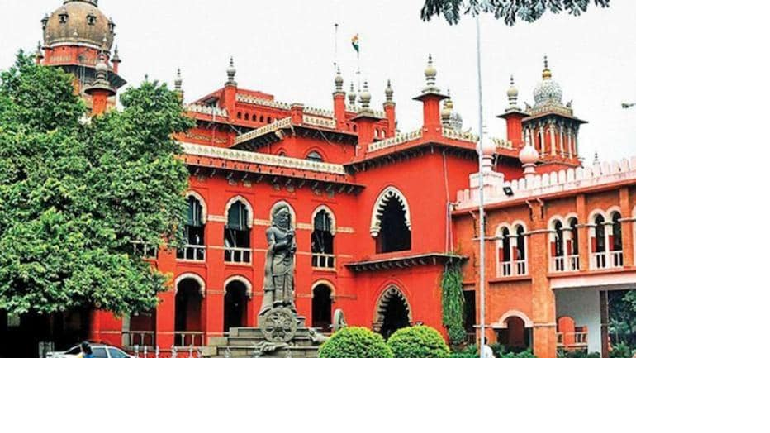
Recently, the Madras High Court, after a Subordinate Court refused to entertain a mutual-consent divorce petition solely on the ground that the wife was “born a Muslim,” even though the marriage had been performed in a Hindu temple with full Hindu rites. The case raised an important question: can personal law be invoked based on lived faith and conduct rather than birth alone?
The husband and wife, both residents of Chennai, had jointly approached the Sub Court seeking dissolution of their marriage under Section 13-B of the Hindu Marriage Act, 1955. Their marriage had been solemnised in 2020 at a Temple, strictly in accordance with Hindu customs. The couple produced photographs of the ceremony and a letter from the temple authorities confirming the wedding.
However, during the final hearing, the trial court flagged a doubt about maintainability on learning that the wife had been born to Muslim parents. Without accepting the couple’s explanation, the Court dismissed the petition, holding that the Act applies only to Hindus by religion and not to Muslims.
Counsel for the Petitioners argued that the wife, though born in a Muslim family, had been raised in Hindu customs due to her maternal grandmother’s influence and had consciously professed Hinduism at the time of marriage. He submitted that her participation in Hindu rituals and the act of marrying in a Hindu temple clearly established her conversion by conduct.
He relied on the Supreme Court’s decision in Perumal Nadar v. Ponnuswami, which held that conversion to Hinduism can be established through bona fide intention and conduct, even without formal ceremonies or documentation. On this basis, he asserted that the couple was fully entitled to invoke the Hindu Marriage Act.
The High Court noted that the marriage had unquestionably taken place in a Hindu temple and that the photographs and temple certificate corroborated the couple’s claims. It held that the wife’s active participation in Hindu marriage rituals and the couple’s conscious choice to seek relief under the Hindu Marriage Act were clear indicators that she had embraced the Hindu faith.
The Court reiterated the Supreme Court’s position that no formal ceremony is necessary for conversion and that genuine conduct and intention are sufficient evidence. It was remarked that merely retaining one’s original name cannot be a ground for doubting faith or rejecting statutory remedies.
Importantly, the Court observed that, having married under Hindu rites, the couple could not access remedies under the Special Marriage Act either. Therefore, denying them recourse under the Hindu Marriage Act would leave them remediless.
Setting aside the Sub Court’s order, the High Court restored the mutual-consent divorce petition and directed the trial court to decide it on the merits within four weeks. The Civil Revision Petition was thus allowed without costs.
Case Title: XYZ v. ABC
Case No.: CRP. No.1148 of 2025
Coram: Hon’ble Mr Justice P.B.Balaji
Counsel for the Petitioner: Adv.V.M.Venkataramana
Read Judgement @LatestLaws.com
Picture Source : https://akm-img-a-in.tosshub.com/indiatoday/images/story/202009/cover_pic_6_1200x768.jpeg?1vJXVlbHWXYU4wxJOML_a7L1IMWk3.vm&size=770:433




















