









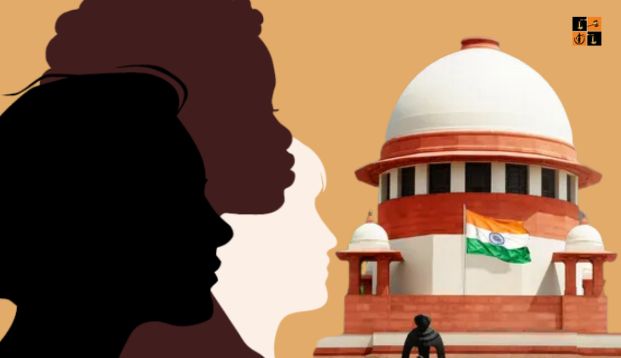
Today, in a constitutionally charged hearing that could reshape the contours of religious freedom, the Centre told the Supreme Court that restrictions on the entry of women of a particular age group at the Sabarimala temple are rooted in faith and cannot be branded as discrimination. Addressing a Nine-Judge Bench examining the scope of Articles 25 and 26 of the Constitution, the government argued that judicial review must remain limited in matters of religion, placing the spotlight on a critical question: can courts reframe long-standing religious practices in the name of equality?
The case arose in the course of hearings linked to the Sabarimala dispute, where the Court is considering broader constitutional questions on religious denominations and essential practices. The Centre, represented by Solicitor General Tushar Mehta, strongly contested the narrative that restrictions on women’s entry reflect patriarchy, asserting that Indian society traditionally accords women a position of reverence rather than subordination. It was argued that earlier legal interventions ensuring temple access were aimed at dismantling caste-based exclusion and cannot be equated with faith-based distinctions tied to specific religious beliefs.
The Centre also cautioned against the growing reliance on “constitutional morality” to evaluate religious practices, contending that such an approach risks imposing judicial standards over deeply rooted traditions. Emphasising denominational autonomy, it was submitted that not all restrictions amount to discrimination, especially when they are limited to specific institutions and grounded in the unique character of the deity and worship.
The courtroom exchange reflected a sharp constitutional tension between equality rights and freedom of religion. The Centre asserted that “India… has always not only treated ladies equally, but… on a higher pedestal,” urging the Court not to import Western notions of patriarchy into Indian religious contexts. It further argued that practices at Sabarimala are not about exclusion or dignity but about preserving denominational beliefs, drawing parallels with accepted religious norms across faiths, such as dress codes or entry conditions. At the same time, the Bench actively engaged with the implications of such arguments, with Justice B.V. Nagarathna questioning whether concepts like untouchability could be selectively applied and whether courts can entirely defer to religious claims. The Court also examined whether determining “essential religious practices” falls within judicial competence or lies beyond its institutional role.
The matter remains under hearing, with no final determination yet.
Disclaimer: This news/ article includes information received via a syndicated news feed. The original rights remain with the respective publisher.
Picture Source :



















