









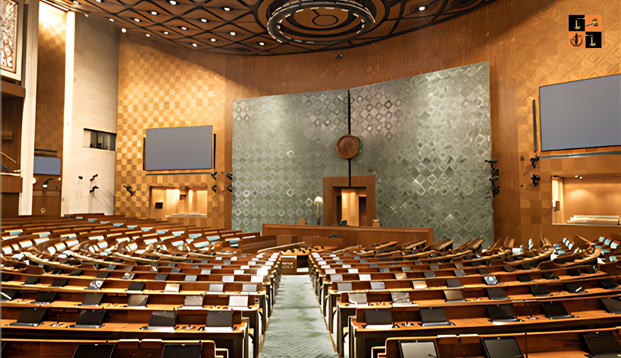
On Wednesday, the Lok Sabha referred the 130th Constitution (Amendment) Bill to a Joint Parliamentary Committee for detailed scrutiny. The landmark legislation seeks to automatically remove Union and State Ministers, including the Prime Minister and Chief Ministers, if they remain in custody for 30 consecutive days in connection with offences punishable with imprisonment of five years or more. Union Home Minister Amit Shah introduced the Bill alongside two related legislations amending the Government of Union Territories Act, 1963 and the Jammu and Kashmir Reorganization Act, 2019, ensuring that Union Territory Ministers are also covered under the proposed framework.
The introduction of the Bills sparked strong opposition from leaders including Asaduddin Owaisi, Manish Tewari, NK Premchandran, KC Venugopal, and Dharmendra Yadav. However, following a voting process, the House approved their introduction and sanctioned referral to a Joint Parliamentary Committee, comprising 21 Lok Sabha and 10 Rajya Sabha members, to examine the proposed reforms in detail.
The 130th Amendment proposes insertion of new clauses in the Constitution. Under the proposed Article 75, a Union Minister detained for 30 consecutive days on allegations of serious criminal offences would be removed from office by the President on the advice of the Prime Minister. If the Prime Minister does not tender advice by the thirty-first day, the Minister would automatically cease to hold office. Similar provisions are envisaged under Article 164 for State Ministers, with the Governor acting on the advice of the Chief Minister, and Article 239AA for Ministers of the National Capital Territory of Delhi. Amendments to Union Territory laws would mirror this mechanism, while clarifying that Ministers may be reappointed upon release from custody.
In its Statement of Objects and Reasons, the government underscores that public office demands complete integrity and that a Minister facing serious criminal allegations risks undermining constitutional morality, good governance, and public trust. The Bill emerges in the context of several high-profile cases, including former Delhi Chief Minister Arvind Kejriwal, former Tamil Nadu Minister V. Senthil Balaji, Jharkhand Chief Minister Hemant Soren, and former West Bengal Education Minister Partha Chatterjee, who faced arrest over corruption and money-laundering allegations. The Supreme Court had notably expressed concern over the reinstatement of Senthil Balaji post-bail, emphasizing that a Minister cannot simultaneously enjoy liberty and hold office.
The referral to the Joint Parliamentary Committee marks a critical step toward strengthening ministerial accountability, reinforcing constitutional governance, and restoring public confidence in the ethical standards expected from those holding public office. The Bill signals the government’s intent to establish a clear legal framework ensuring that no elected representative remains in office while facing serious criminal charges.
Picture Source :



















