









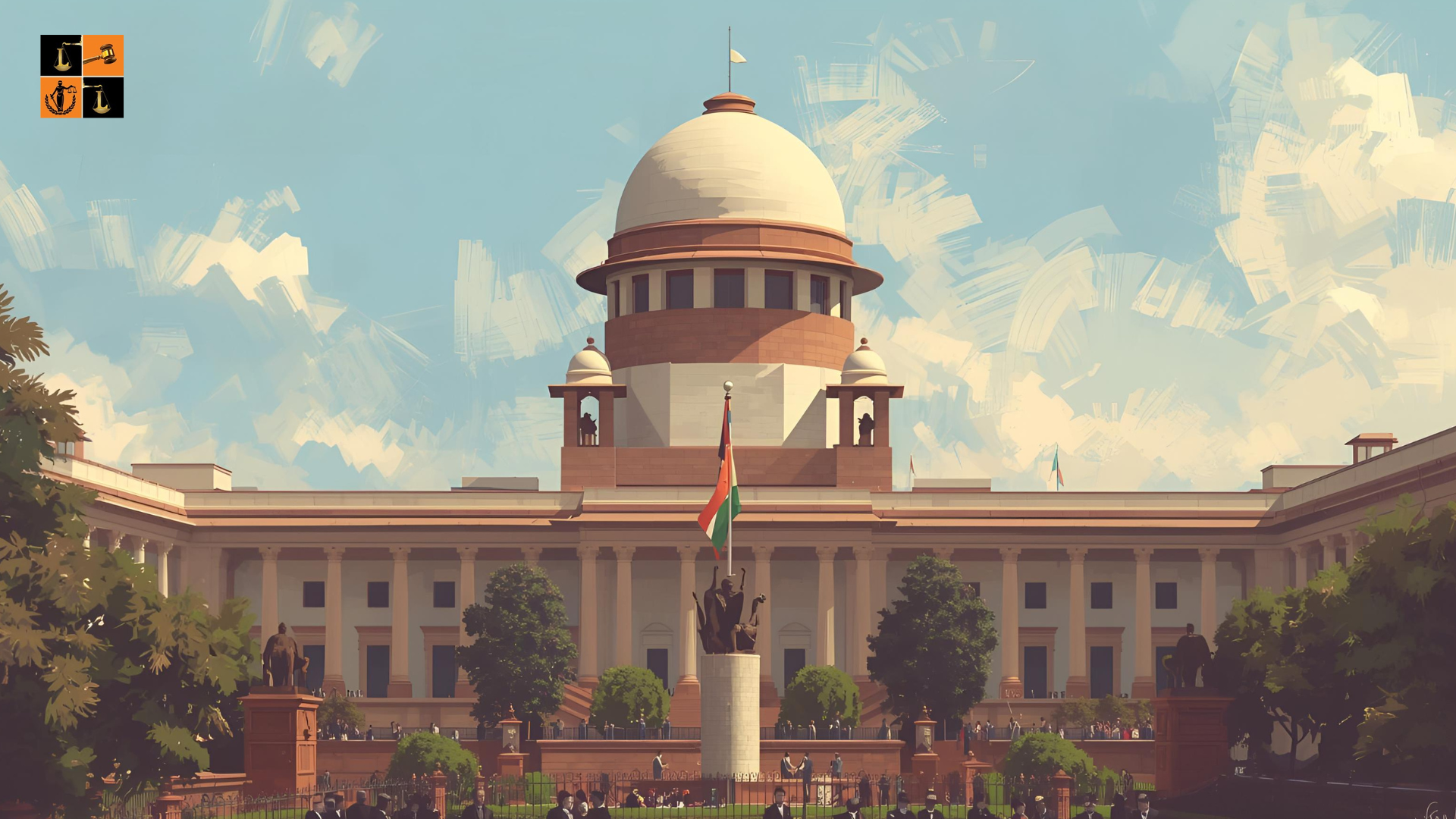
The Supreme Court recently sought an explanation from the Union Government regarding the rationale behind the Tribunals Reforms Act, 2021, which is under judicial scrutiny for allegedly reinstating provisions previously struck down by the apex court.
A Bench comprising Chief Justice of India B.R. Gavai and Justice K. Vinod Chandran was hearing the Madras Bar Association v. Union of India matter, wherein the Association has challenged the 2021 Act on the ground that it contradicts earlier rulings mandating a minimum five-year tenure for tribunal members and eligibility for advocates with at least ten years of practice.
During the hearing, Justice Chandran questioned the Attorney General for India, R. Venkataramani, about the basis of the government’s decision. “What exactly prompted this reform? You mentioned deliberation, but what was the thought process behind it?” he asked, further observing that a single deviation could not justify legislative reform without substantial reasoning.
Responding, the Attorney General submitted that the 2021 Act emerged as a result of judicial observations highlighting the need for uniformity in tribunal appointments. He contended that the statute reflects “a dialogue between the Parliament and the Court” aimed at harmonizing the structure across various tribunals. “Uniformity was not a mere creation of the legislature, it evolved through the Court’s engagement on the issue,” he added, emphasizing that the legislation did not violate judicial directives.
Referring to past judgments in Madras Bar Association (III) and Rojer Mathew v. South Indian Bank Ltd. & Ors., the Bench noted that similar provisions, such as limiting members’ tenure to four years, setting a minimum age of 50 years, and permitting the selection committee to recommend two names per post, had already been invalidated. The Chief Justice then pointedly asked whether Parliament could reintroduce provisions that had been explicitly struck down earlier, albeit with minor changes in language.
The Attorney General maintained that the amendments were informed by “contrary experiences” that arose after the earlier judgments, asserting that the age limit was introduced to ensure that appointees possess maturity and a broader societal perspective. He further observed that many advocates are reluctant to join tribunals for short, fixed terms, urging the Court not to rely on anecdotal instances in assessing the practicality of such appointments.
Earlier, Senior Advocate Arvind Datar, representing the petitioner association, argued that recommending two names for each position of Chairperson or Member was inappropriate, and that selections should strictly follow merit lists rather than waiting lists.
The Bench is set to continue hearing the matter later today at 3 PM.
It may be recalled that in 2021, while hearing the same challenge, the Apex Court had expressed displeasure at the legislature’s decision to re-enact provisions previously invalidated, observing that the government had not fully complied with the spirit of earlier judicial pronouncements.
Disclaimer: This news/ article includes information received via a syndicated news feed. The original rights remain with the respective publisher.
Picture Source :



















