









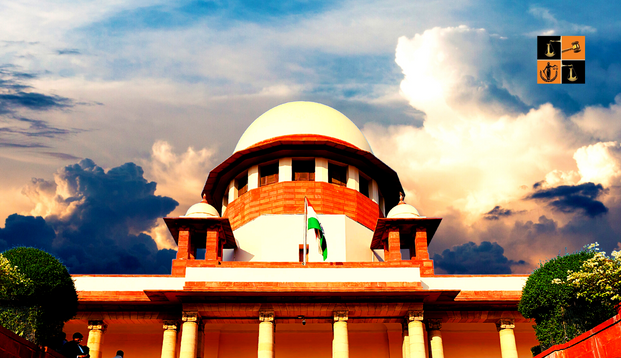
Recently, the Supreme Court commenced proceedings on the crucial legal issue of whether courts have the authority to modify arbitral awards under the Arbitration and Conciliation Act, 1996. The Constitution Bench emphasized the need for clarity on the extent of judicial intervention in arbitration matters, particularly under Sections 34 and 37 of the Act.
The matter pertains to the interpretation of Sections 34 and 37 of the Arbitration and Conciliation Act, 1996, which regulates judicial interference in arbitral awards. Section 34 allows for setting aside an award only on limited grounds such as procedural irregularities, violation of public policy, or lack of jurisdiction. Section 37 governs appeals against orders related to arbitration, including refusals to set aside awards. The key issue before the Court is whether these provisions empower courts to modify an arbitral award or if their role is strictly limited to setting aside an award in its entirety.
A three-judge bench, on January 23, 2024, had referred this contentious question to a larger bench for authoritative determination. The matter arose in the case of Gayatri Balasamy v. ISG Novasoft Technologies Ltd., which had raised concerns regarding the scope of judicial review in arbitration. The three-judge bench comprising Justice Dipankar Datta, Justice KV Viswanathan, and Justice Sandeep Mehta had framed essential questions regarding the scope and limitations of the power to modify an arbitral award.
The Solicitor General, representing the Central Government, argued that judicial interference in arbitration should remain minimal to preserve the integrity and efficiency of the arbitral process. However, he contended that in certain exceptional cases, courts should have the power to modify an arbitral award rather than setting it aside entirely. The petitioner submitted that a rigid interpretation of Section 34 could lead to situations where valid awards are wholly invalidated instead of being appropriately adjusted to align with legal standards.
The Constitution Bench, comprising Chief Justice Sanjiv Khanna and Justice B.R. Gavai, Justice Sanjay Kumar, Justice K.V. Viswanathan, and Justice Augustine George Masih, acknowledged the significance of the issue and the need for definitive judicial clarity. The Bench stated “This Court will first hear arguments of the counsel seeking reconsideration of the ratio expressed in Project Director, NHAI v. M. Hakeem, which held that courts do not have the power to modify an arbitral award under Sections 34 and 37. Thereafter, this Court will hear arguments from the opposing side to determine whether such power exists and, if so, the extent to which it can be exercised.”
The Court noted that arbitration is intended as an alternate dispute resolution mechanism where judicial interference is minimal. However, it recognized that in certain circumstances, a strict approach might lead to unjust outcomes. The Court also observed that existing judicial precedents have traditionally adopted a narrow interpretation of Section 34 to uphold the principle of arbitral finality.
The Apex Court has reserved its decision on the matter after hearing extensive arguments. The Bench will examine whether the power to modify an arbitral award exists within the framework of Sections 34 and 37 and, if so, to what extent it may be exercised. The outcome of this ruling is expected to have significant implications for arbitration law in India, particularly in balancing the finality of arbitration with necessary judicial oversight.
Picture Source :



















