









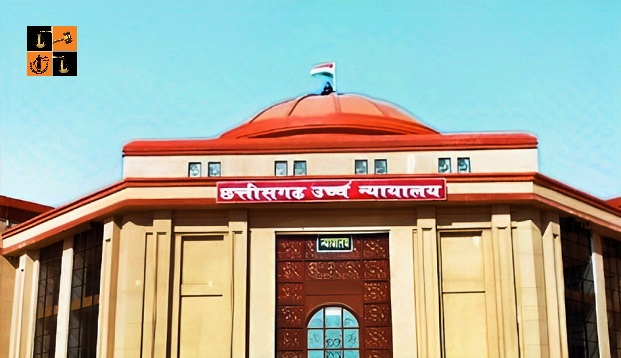
The Chhattisgarh High Court upheld the Family Court’s divorce decree on grounds of cruelty and desertion, awarding permanent alimony to the wife. The Court relied on credible evidence and unchallenged admissions by the appellant, underscoring the importance of both documentary and oral proof in matrimonial disputes.
The parties were married in 2009 and had a son, Samarth Tamrakar, who currently resides with the mother in Bilaspur. The husband filed for divorce alleging cruelty and desertion, claiming that the wife constantly provoked him against his parents, demanded separation, insulted him, and even caused harm during pregnancy. The wife denied all allegations, asserting that she was emotionally and financially neglected, subjected to abusive language, and that the Family Court failed to consider her petition for restitution of conjugal rights under Section 9 of the Hindu Marriage Act. Both parties led evidence, including witnesses and documentary proofs.
The counsel for the appellant argued that the Family Court erred in law and fact by relying solely on the husband’s allegations. It was contended that there were no irreconcilable differences justifying divorce, that proper reconciliation efforts or counselling were ignored, and that the Court overlooked the appellant’s application for restitution of conjugal rights. The appellant asserted she never misbehaved with her in-laws or provoked separation, and the judgment was passed mechanically without judicial scrutiny, resulting in a grave miscarriage of justice.
The counsel for the respondent submitted that credible oral and documentary evidence established that the wife’s conduct amounted to cruelty and desertion. The appellant repeatedly demanded that the husband live separately from his parents, insulted him by calling him a “pet rat,” and abandoned the matrimonial home for extended periods. Witness testimonies and text messages corroborated his claims, demonstrating mental cruelty and continuous desertion, thus justifying the Family Court’s decree of divorce.
The High Court observed that the respondent and his family provided credible evidence, including oral testimony and documentary proofs, demonstrating the appellant’s hostile conduct. The Court highlighted the significance of the text message in which the wife insisted her husband leave his parents, noting, “This conduct cannot be considered benign; it belies the claim of innocence and underscores mental cruelty, particularly in the context of Indian joint family values.” Regarding desertion, the Court noted that the appellant remained away from the matrimonial home for years without plausible justification. The Court also clarified that the pending petition for restitution of conjugal rights did not override established findings of cruelty and desertion.
On alimony, the Court considered the employment and income of both parties and the responsibility of the wife to maintain and educate their son. Applying the principles from Rajnesh v. Neha, the Court held that permanent alimony of Rs. 5,00,000 was appropriate, in addition to maintenance under Section 125 CrPC.
The High Court affirmed the Family Court’s judgment and decree dated 23.08.2019. The marriage between Smt. Monika Tamrakar and Shri Prashant Kumar Tamrakar stands dissolved. The respondent is directed to pay permanent alimony of Rs. 5,00,000 to the appellant within six months. The appeal filed by the wife is dismissed.
Case Title: Monika Tamrakar Vs. Prashant Kumar Tamrakar
Case No.: FA(MAT) No. 10 of 2019
Coram: Justice Rajani Dubey, Justice Amitendra Kishore Prasad
Advocate for Petitioner: Adv. Shrijita Kesharwani, R. K. Kesharwani
Advocate for Respondent: Adv. J. A. Lohani, B. M. Roy
Picture Source :




















