









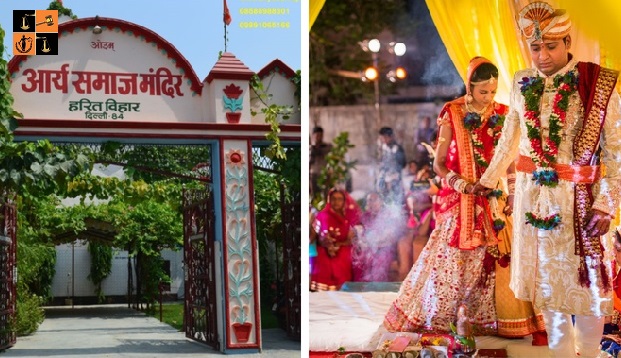
In a tense matrimonial dispute driven by questions of ceremony, consent, and legality, the Madhya Pradesh High Court heard an appeal filed by the son of a 75-year-old retired Company Commander contesting the Trial Court’s refusal to declare that a 45-year-old woman, whom his late father allegedly married, was not legally his wife. At the heart of the challenge lies a critical allegation, the marriage lacked proof of Saptapadi, the seven-step ritual that forms the spine of a valid Hindu marriage.
The controversy began when the elderly man, widowed and living alone, reportedly placed a newspaper advertisement seeking a bride for his son. Instead, the respondent woman entered his life, allegedly befriended him, and soon claimed marital status based on an Arya Samaj marriage certificate dated 26.03.2012.
The plaintiff’s family asserted she concealed previous marriages, blackmailed him, and orchestrated a fraudulent marriage purely for financial benefits. As litigation intensified, allegations surfaced of her earlier marriage, criminal records, and dishonest intent, claims she vehemently denied, insisting that a lawful Vedic ceremony was performed and later even registered with the Municipal Corporation.
The Bench zeroed in on one question, "Was the marriage truly solemnized under Section 7 of the Hindu Marriage Act?" . Citing the Apex Court in Dolly Rani v. Manish Kumar Chanchal, the Court reiterated that a certificate alone proves nothing unless the marriage is solemnised with essential rituals.
To drive the point home, the Court quoted, “The word ‘solemnised’ means to perform the marriage with ceremonies in proper form. Unless the marriage is performed with appropriate ceremonies, it cannot be said to be ‘solemnised’.”After reviewing evidence and assessing the absence of ceremony-proof with precision, the High Court upheld the Trial Court’s findings and dismissed the appeal.
Picture Source :



















