









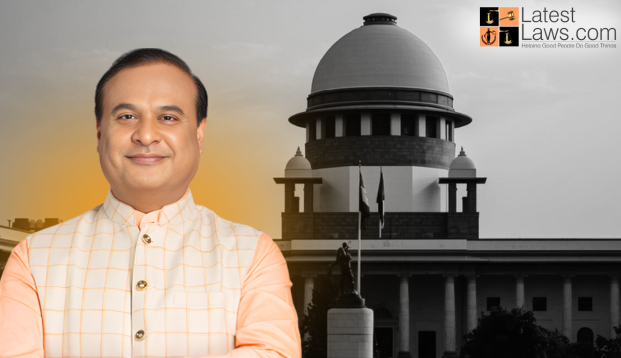
The Jamiat Ulema-i-Hind has urged the Supreme Court to frame binding guidelines to restrain holders of constitutional offices from making communal or divisive public statements, citing recent remarks attributed to Assam Chief Minister Himanta Biswa Sarma. The plea, part of a long-pending batch on regulating hate speech, presses the Court to step in amid claims that existing laws are failing to check inflammatory rhetoric by powerful public figures.
In written submissions filed in a 2021 petition, Jamiat referred to a speech delivered in Assam on January 27, alleging that “four to five lakh Miya voters would be removed” following a special revision exercise, contending that the term “Miya” is commonly used as a slur against Muslims in the state.
The organisation argued that this was not an isolated incident and pointed to a broader pattern of communal rhetoric by individuals holding high public office. It maintained that such speech, even when couched in political or administrative language, fuels social exclusion, stigmatisation, and hostility against minorities, striking at the heart of constitutional guarantees of equality, dignity, and fraternity.
While the Apex Court is yet to pronounce its decision, the petition places strong reliance on settled constitutional principles and past rulings to argue that hate speech enjoys no protection under free speech guarantees. Emphasising that “speech which, in its context, primarily carries no other meaning other than hatred, hostility and ill will” cannot be tolerated from constitutional authorities, the petition urges judicial intervention under Article 142.
The submissions also highlight gaps in enforcement, claiming that “disguised hate speech” often escapes action due to selective policing, despite penal provisions under the Bharatiya Nyaya Sanhita. The matter, heard by a Bench of Justice Vikram Nath and Justice Sandeep Mehta, was reserved for judgment on January 20.
Picture Source :



















