









May 9, 2019:
Supreme Court has found prima facie that in acid burning case, enhanced punishment was required but then considering the age of accused and also the age of the case, it shown leniency towards the accused.
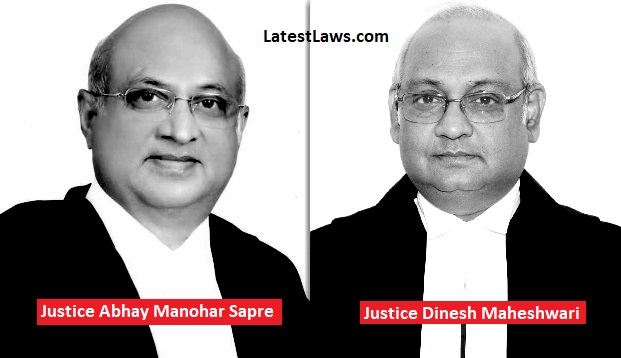
A bench of Justice Sapre and Justice Maheshwari has passed the judgment in the case titled as OMANAKUTTAN vs THE STATE OF KERALA on 09.05.2019.
The accused-appellant and the injured victim Sunil Kumar (PW-1) were neighbours. On 26.11.1997 at about 6 p.m., while the victim PW-1 was passing through MannatharaThopramkudy Panchayat Road, the appellant along with his wife (accused No. 2) poured acid on the victim from a ridge on the left side of the road. Allegedly, the appellant and the victim had previous enmity due to which, the appellant poured acid, causing serious injuries over the head, neck, shoulder and other parts of the body of the victim.
PW-1, the injured victim, in his testimony stated that the accused-appellant poured red-coloured liquid upon him from a yellow bucket while he was coming back from Thopramkudy; that the liquid was poured upon him from a height on the left side of the body due to which, his body began to burn, he tore off his shirt and dhoti and screamed; his mother (PW-2) came rushing to him crying; they ran towards a tea shop; and PW-4 and PW-5 took him to hospital where he remained as inpatient for 3 months. In response to the question if he was capable of doing his daily routine by himself during those 3 months, he replied in the negative.
After scrutinizing the relevant evidence, the Judicial Magistrate First Class, by his judgment and order dated 04.12.2002, convicted the appellant for the offence under Section 326 IPC and sentenced him to simple imprisonment for one year together with fine of Rs. 5,000/- and default stipulation.
The main plank of contentions of the learned counsel for the appellant has been that the victim PW-1 never stated in his evidence that he was in severe bodily pain for 20 days nor did he state that he had suffered disfigurement; and merely for his hospitalisation for more than 20 days, no inference could be drawn that he was in severe bodily pain or was unable to follow his ordinary pursuits.
The Supreme Court did not agrre and observed that in the circumstances, requirement of grievous hurt defined in Section 320 IPC was satisfied. It upheld the conviction. Though it wanted to enhance the sentence but considering the age of accused, it shown leniency.
Contextually however, the Supreme Court observed "It needs hardly any emphasis that the act of causing grievous hurt by use of acid, by its very nature, is a gruesome and horrendous one, which, apart from causing severe bodily pain, leaves the scars and untold permanent miseries for the victim. The legislature having taken note of the gravity of such an offence has, by way of Act No. 13 of 2013, inserted Sections 326A and 326B IPC, providing higher punishment with minimum imprisonment for the offences of voluntarily causing grievous hurt by use of acid and voluntarily throwing or attempting to throw acid. The present one being a matter relating to the offence committed in the year 1997, we need not elaborate on the provisions now inserted, but, looking to the gravity of offence, the punishment as awarded in this matter prima facie appears to be rather inadequate".
Read the Judgment here:
Share this Document :Picture Source :



















