









June 23, 2019:
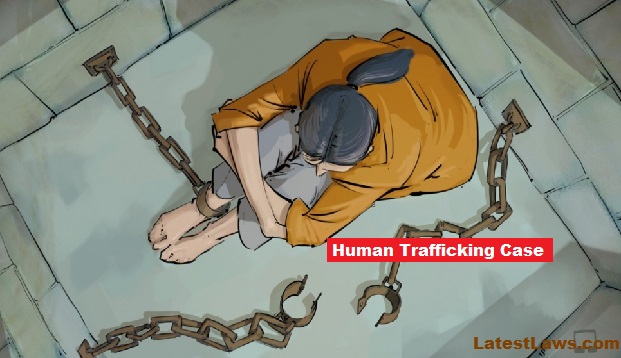
A group of girls who were locked up in a room near northwest Delhi's Britannia Chowk were rescued after one of the girls managed to contact police.
The cops made a video call to the girl to identify the location and reach the girls. The girls were brought to Delhi by a placement agent and locked up before they got employed.
The agent and her aide were caught from the area later .
On Thursday, PCR staff received a call from a girl, claiming that a few girls were locked up and being beaten up.
The caller told the cops that they were near Britannia Chowk.
Human trafficking in India, although illegal under Indian law, remains a significant problem.
People are frequently illegally trafficked through India for the purposes of commercial sexual exploitation and forced/bonded labour. Although no reliable study of forced and bonded labour has been completed, NGOs estimate this problem affects 20 to 65 million Indians.
Women and girls are trafficked within the country for the purposes of commercial sexual exploitation and forced marriage, especially in those areas where the sex ratio is highly skewed in favour of men. Men and boys are trafficked for the purposes of labour.
Law penalises trafficking for commercial sexual exploitation through the Immoral Traffic Prevention Act, 1956 (ITPA), with prescribed penalty of seven years' to life imprisonment.
Law also prohibits bonded and forced labour through the Bonded Labour System Abolition Act, 1976, the Child Labour Act, 1986 and the Juvenile Justice Act, 2015.
Police authorities also use Sections 366(A) and 372 of the Indian Penal Code, 1860, prohibiting kidnapping and selling minors into prostitution respectively, to arrest traffickers. Penalties under these provisions are a maximum of ten years' imprisonment and a fine.
India ratified the 2000 UN TIP Protocol 2011.
In a related Devlopment
The US on Thursday retained India in Tier 2 list of countries in its annual report on human trafficking, arguing that the country does not fully meet the minimum standards for its elimination even as it is making progress.
Tier 2 is for those countries whose governments do not fully meet the TVPA's minimum standards but are making significant efforts to bring themselves into compliance with those standards.
Picture Source :



















