









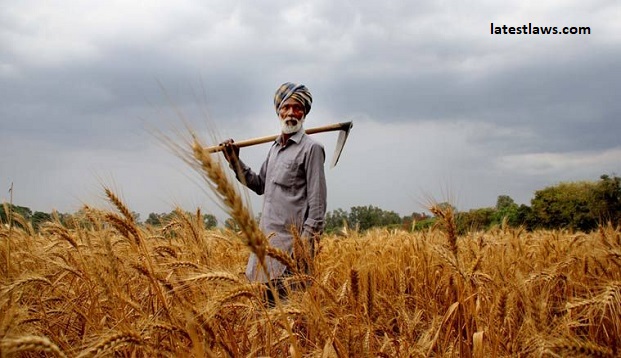
Who is a farmer? What is the Govt’s definition of a farmer & how many farmers are there in India by that definition?
Agriculture Minister Narendra Singh Tomar failed to answer that question when it was asked in Parliament last week. The Govt’s ambiguity has serious implications for the design & beneficiaries of the schemes meant to help them, including its flagship PM-KISAN (Pradhan Mantri Kisan Samman Nidhi).
The question was posed in the Rajya Sabha by BJP MP Ajay Pratap Singh who also asked whether any survey had been conducted to find out the number of farmer families.
Agriculture a State subject says Minister
In a written response, the Agriculture Minister evaded giving any definition of a farmer & instead said agriculture is a State subject. He provided data on the number of agricultural landholdings & noted that the Centre provides income support to all farmer families who own cultivable land, that is, via the PM-KISAN scheme.
In the discussion that followed, MPs pointed out that the number of landholdings don't necessarily equate with the number of farming households. It was noted that dairy farmers, fisherfolk, fruit & flower growers, as well as landless agricultural workers who cultivate the land belonging to others, would not fit into a narrow definition where farmers are linked to ownership of land alone.
In fact, there is a clear & comprehensive definition available in the National Policy for Farmers, which was drafted by the National Commission of Farmers headed by M.S. Swaminathan & officially approved by the Centre in 2007 following consultations with the States.
It says, “For the purpose of this Policy, the term ‘FARMER’ will refer to a person actively engaged in the economic and/or livelihood activity of growing crops & producing other primary agricultural commodities & will include all agricultural operational holders, cultivators, agricultural labourers, sharecroppers, tenants, poultry & livestock rearers, fishers, beekeepers, gardeners, pastoralists, non-corporate planters & planting labourers, as well as persons engaged in various farming related occupations such as sericulture, vermiculture & agro-forestry. The term will also include tribal families / persons engaged in shifting cultivation & in the collection, use & sale of minor & non-timber forest produce.”
The policy emphasises the need to substantially increase the net income of farmers & develop support services for them, using that comprehensive definition.
Farmer leaders & researchers point out that the definition of a farmer is not merely a philosophical or semantic question, but rather has practical implications.
Deliberate dragging of the feet, says Yogendra Yadav
“There is a deliberate dragging of the feet to avoid this pre-existing official definition which is there in black & white,” said Swaraj India president Yogendra Yadav, who also heads the Jai Kisan Andolan, referring to the Agriculture Minister’s evasive response. “I think there is a deliberate attempt to fudge it to escape responsibility for the welfare of all farmers.”
He noted that most schemes meant for farmers’ welfare, including the procurement of wheat & paddy at minimum support prices, are effectively available only for land owners. Even in death, those who work on the land may not be identified as farmers for the purposes of counting farmer suicides.
According to Census 2011, there are 11.8 crore cultivators & 14.4 crore agricultural workers.
“In practice, those who cultivate or work on the land but do not own it are excluded from access to agricultural credit & interest subvention for farm loans. Crop insurance & loan waivers go to loanees so they are left out of that as well. Access to subsidised crop inputs is difficult without identification as farmers. In the event of crop failure, compensation is only given to owners. Direct income support schemes such as PM-KISAN are limited to owners,” said G.V. Ramanjaneyulu, executive director of the Secunderabad-based Centre for Sustainable Agriculture. He said tax exemption is usually claimed by owners who give an unverified affidavit that they cultivate the land.
He said, “There is a need to convert the M.S. Swaminathan Commission’s definition into a legal & actionable tool for identification. Already, the revenue department is supposed to annually record who is actually cultivating each piece of land. In an era of GPS, GIS & Aadhaar, this should not be that difficult. It simply takes political will,” said Dr. Ramanjaneyulu. Apart from adding inclusion criteria other than land-ownership, the Centre must add exclusion criteria so absentee landlords are left out. “Otherwise, the farmer who actually takes the risk gets no support, but those who treat land as an investment or speculation get all the benefits".
60 per cent -70 per cent of farmers are actually women: reports
“Linking the identity of a farmer to land ownership has devastating consequences for another category: women farmers. Some studies estimate that 60 per cent -70 per cent of farmers are actually women, but their names are rarely on ownership documents,” noted Devinder Sharma, an agriculture scientist & food policy expert.
Assuming that land ownership makes a farmer is one of the reasons why only 37 per cent of this year’s PM-KISAN’s budget has been utilised after seven months, & why officials estimate a third will be left unspent at the end of the year. The original estimate of beneficiaries was 14.5 crore, based on the number of landholdings. However, only 7.5 crore farmers have benefited so far. “If the budget is available, why not expand the definition of farmers under the scheme & give the benefit to all those who need it?” asked Mr. Sharma.
Picture Source :



















