









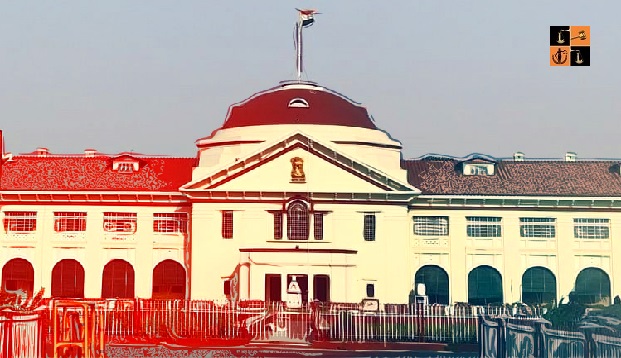
The Patna High Court Bench of Justice Sunil Dutta Mishra recently observed that the principle that there cannot be a "partial partition" is not an absolute one and ordinarily a suit for partial partition does not lie.
Background:
The present case is an appeal against the dismissal of the suit for partition. The lower courts had held that in this case partial partition is not possible and there is a non-joinder of necessary parties.
The plaintiff had filed a title partition suit before the Court of Sub-Judge, Bagaha for partition of lands of Schedule Nos. 2 and 3 of the plaint with a prayer that their share is carved out from the ancestral properties. The case of contesting defendants was that land and house of Schedule-3 were ancestral and joint properties, but the same was partitioned among the parties as per their convenience prior to compromise decree in but land and the house of Schedule-2 are not joint family properties but the same is their self-acquired properties purchased after compromise decree in and the same was never joint properties.
The Trial Court was of the view that the plaintiffs have not scheduled all the properties of the joint family and it is not possible to determine in what manner the share of land and house be distributed between the parties. The Appellate Court below affirmed the finding of the Trial Court.
Submission :
The Appellant argued before the High Court that both the courts failed to consider that partial partition is possible in law.
Order of the Court:
Court ordered that Ordinarily, a suit for partial partition does not lie. But, a suit for partial partition will lie when the portion omitted is not in possession of Coparceners and may consequently be deemed not to be really available for partition. While the High Court observed that partial partition is allowed, it was of the view that this case does not come under the said category.
The order read as,
"Order I Rule 3 C.P.C. speaks about the persons who may be made as defendants. A proper party is one whose presence is necessary for a complete and final decision on the question involved in the proceedings. The object of the Rule is to bring on record all the persons who are parties to the disputes relating to the subject matter so that the dispute may be determined in their presence at the same time without any protraction, or inconvenience, and the multiplicity of the proceeding may be avoided. In this case, both the Courts below found that many necessary parties were not made parties,"
Moreover, it was observed that such findings were based upon an appreciation of evidence on record and there is no perversity or unreasonableness warranting interference via the second appeal.
Case Title: Ran Vijay Kumar Ors. v Sanjay Kumar son of Ganesh Prasad & Ors.
Bench: Justice Sunil Dutta Mishra
Picture Source :




















