









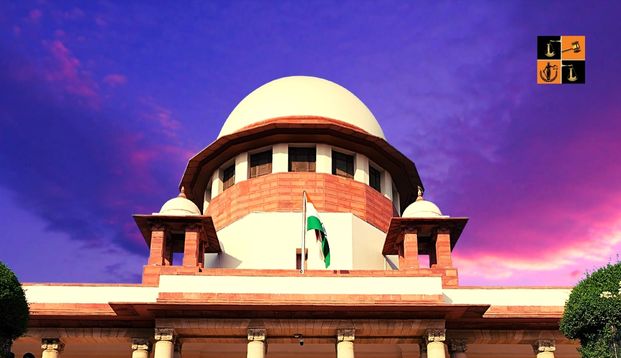
In a recent criminal appeal, the Supreme Court examined a critical issue concerning charges of cruelty and abetment to suicide under the Indian Penal Code. While addressing the case, the Court highlighted that "mere harassment, by itself, is not sufficient to find an accused guilty of abetting suicide,".
This came in the context of an appeal involving allegations against a husband and his in-laws for subjecting a woman to mental and physical abuse, including the sale of her streedhan. The Court examined the applicability of charges under Sections 306 (abetment to suicide) and 498A (cruelty) of the Indian Penal Code (hereinafter referred to as IPC), raising important questions about the link between harassment and legal responsibility.
Brief Facts:
This criminal appeal arose from the Gujarat High Court’s order dated 09.05.2024, which dismissed Criminal Revision Application No. 536 of 2024 filed by the appellants. The appellants, charged under Sections 306, 498A, and 114 of the IPC, sought discharge from these charges. The case was based on an FIR (No. 11206038210259 of 2021) filed by the deceased’s father, alleging that the appellants, including the deceased’s husband (Appellant No. 1) and in-laws (Appellant Nos. 2 and 3), subjected her to both mental and physical harassment, including the sale of her streedhan (marital ornaments). This mistreatment was said to have led to the deceased’s suicide on 18.04.2021. The appellants had earlier attempted to quash the FIR and later sought discharge, but both the Sessions Court and the High Court rejected their applications, determining there were sufficient grounds to proceed with the charges.
Contentions of the Petitioner:
The appellants argued that the allegations against them were groundless and that no prima facie case existed to charge them under Sections 306 and 498A IPC. They maintained that the accusations were vague and did not establish a case of abetment to suicide or harassment. The appellants also contended that the alleged harassment regarding the sale of the deceased’s jewelry had occurred a year before her death and did not suggest ongoing mistreatment or dowry demands. They claimed that there had been no other complaints of cruelty and that the necessary mens rea for a charge under Section 306 IPC was absent.
Contentions of the Respondent:
The prosecution argued that the appellants had subjected the deceased to continuous mental and physical abuse, including the sale of her streedhan and tormenting her when she demanded its return. Witnesses testified that the harassment had intensified before her suicide, contributing to her decision to end her life. The High Court found sufficient material to establish a prima facie case, emphasizing that at the charge framing stage, the court was required to determine whether there was strong suspicion based on credible material, rather than evaluate the probative value of the evidence. The prosecution asserted that the revision petition had no merit and upheld the decision to proceed with charges against the appellants.
Observation of the Court:
The Court noted that Section 498A IPC addresses cruelty by the husband or in-laws of a woman, and cruelty is defined as any conduct likely to drive the woman to suicide or cause grave harm to her health. "‘Cruelty’ simpliciter is not enough to constitute the offence, rather it must be done either with the intention to cause grave injury or to drive her to commit suicide or with intention to coercing her or her relatives to meet unlawful demands."
Referring to past judgments, the Court explained that to establish cruelty under Section 498A IPC, it must be shown that the woman was subjected to either physical or mental abuse with the intention of coercing her to meet unlawful demands, or to cause grave harm or suicide.
In the present case, the Court noted that the deceased had informed her relatives and the informant about the physical and mental harassment she endured, including the selling of her streedhan by the appellants. Despite the appellants' argument that the accusations were vague and lacked complaints over twelve years, the Court emphasized that "merely because she did not file any complaint for twelve years does not guarantee that there was no instance of cruelty or harassment."
Further, the Court observed that the statements from the deceased's family and other witnesses "prima facie indicate that the deceased was subjected to physical as well as mental cruelty by her husband and the in-laws," particularly concerning the alleged selling of her gold ornaments. The Court concluded that there was enough material to charge the appellants under Section 498A IPC.
Turning to Section 306 IPC, which deals with abetment of suicide, the Court reiterated that for a conviction, "the prosecution must demonstrate an active or direct action by the accused that led the deceased to take his/her own life." It stressed that "mere harassment, by itself, is not sufficient to find an accused guilty of abetting suicide," and that clear mens rea, or intent to provoke suicide, was essential.
The Court cited the case of S.S. Chheena v. Vijay Kumar Mahajan and stated that "Abetment involves a mental process of instigating a person or intentionally aiding a person in doing of a thing. Without a positive act on the part of the accused to instigate or aid in committing suicide, conviction cannot be sustained."
On the facts of the case, the Court found that the alleged harassment and selling of gold ornaments occurred a year before the deceased's suicide. "The alleged incident of selling of gold ornaments and subsequent physical and mental harassment, as alleged, occurred almost a year before the FIR was registered." Therefore, the Court concluded that there was no proximate link between the harassment and the suicide, and "there is, therefore, absence of mens rea to instigate suicide of the deceased persons."
The decision of the Court:
The Court concluded that the ingredients for the offence under Section 306 of the IPC were not made out, even upon a preliminary analysis of the material on record. Therefore, the appellants could not be charged under Section 306 and were discharged from these charges.
The appeal filed by the appellants was partly allowed. They were discharged from the charges under Section 306 of the IPC, but the charge under Section 498A was upheld, and the trial under this provision would proceed.
Any pending applications were disposed of.
Case Title: Jaydeepsinh Pravinsinh Chavda and others v. State of Gujarat
Case no: SLP (Crl.) No.7957 of 2024
Citation: 2024 Latest Caselaw 761 SC
Coram: Hon’ble Mr. Justice Vikram Nath and Hon’ble Mr. Justice Prasanna B. Varale
Advocate for Petitioner: Adv. Shamik Shirishbhai Sanjanwala
Advocate for Respondent: Adv. Swati Ghildiyal [For Respondent-1]
Read Judgment @LatestLaws.com, Click Here
Picture Source :




















