









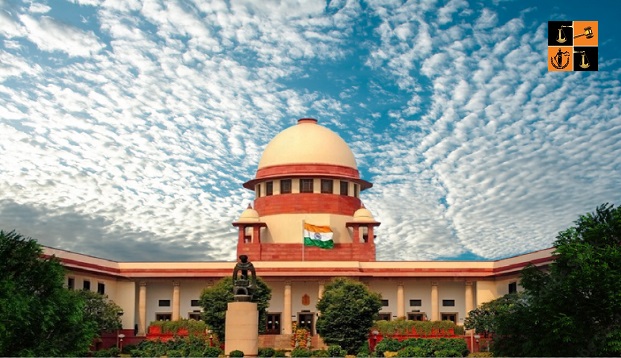
Recently, the Supreme Court held that the grounds of arrest must be communicated promptly and meaningfully to enable the arrested person to understand the accusations and seek appropriate legal remedies. In a case where the appellant challenged the alleged illegal arrest of his son by the CID under various sections of the IPC and BNSS, the court examined whether the arrest complied with constitutional safeguards under Article 21 and Article 22. The court observed that while full details of the offence are not necessary at the time of arrest, the information provided must be sufficient to explain “why he has been arrested,” thereby ensuring protection against arbitrary detention.
Brief Facts:
The appellant approached the High Court of Andhra Pradesh seeking a writ of habeas corpus, alleging that his son, Kessireddy Raja Shekhar Reddy, had been illegally arrested by the CID on 21.04.2025 in connection with a case registered under Sections 420, 409 read with 120-B IPC (now corresponding provisions of the BNS, 2023). It was contended that the arrest lacked lawful justification, as the grounds provided were vague and insufficient, thereby violating Article 21 and Article 22 of the Constitution. The appellant further argued that the arrest was a mere formality without meaningful compliance under Sections 47 and 48 of the BNSS.
However, the CID submitted that the arrest was made in accordance with law, the accused was produced before the Special Judge within 24 hours, and all statutory documents including the arrest memo and remand report were duly served. The Special Judge had also recorded satisfaction regarding procedural compliance. The High Court, after examining the records, held that the requirements under the Constitution and BNSS had been fulfilled, and dismissed the writ petition, while clarifying that the accused was free to pursue appropriate legal remedies.
Contentions of the Appellent:
The Counsel for the appellant, argued that the petitioner’s son was initially treated as a witness under Section 179 BNSS and had willingly agreed to appear before the authorities. Despite this, he was arrested at Hyderabad airport without any public declaration of being an accused. The state’s claim of adding his name as an accused via a case diary entry on 19.04.2025 was never communicated, making the arrest arbitrary. It was further contended that he was coerced during interrogation to falsely implicate the then Chief Minister in an excise policy case, with the involvement of two mediators, revealing a clear abuse of process and mala fide intent.
He further submitted that the arrest memo failed to disclose the essential ingredients of the alleged offences under Sections 409 and 420 IPC, violating Article 22 of the Constitution and Section 47 of the BNSS. The Prevention of Corruption Act charges were added only later, without valid sanction under Section 17A. The only sanction granted was for a different public servant, not the petitioner’s son. As per government SOPs, separate sanctions were mandatory. Thus, both the arrest and continued detention were illegal and unconstitutional.
Contentions of the Respondent:
The Counsel for the State, contended that the arrest of the petitioner’s son was lawful and complied with constitutional and legal provisions, including timely production before the Magistrate within 24 hours, proper communication of arrest grounds, and adherence to Articles 22(2) and relevant BNSS sections. The Magistrate found no ill-treatment, and prior case law supports the procedures followed. The petitioner’s reliance on Priya Indoria was misplaced as it did not consider binding precedents.
Regarding the Prevention of Corruption Act, it was argued that accused, as an IT Advisor, had no connection with the excise policy scam and therefore, approval under Section 17A was not required for him. The alleged offences were unrelated to his official duties, and the sanction granted was specific only to the co-accused involved in the excise matter.
Observations of the Court:
The Apex Court in this appeal carefully examined the sufficiency and meaningfulness of the grounds of arrest communicated to the appellant’s son at the time of his arrest. The central question posed before the Court was whether the information provided was adequate to inform the arrested person about the accusations against him and the reason for his custodial detention. The Court noted that the grounds of arrest must not be mere formalities or empty statements but should serve the purpose of informing the arrested individual sufficiently, enabling him to understand the basis of the arrest and to seek appropriate remedies such as bail or habeas corpus.
The Court emphasized that the test for adequacy of the grounds of arrest comes from State of Bombay v. Atma Ram(1951), which held that the communication must be “sufficient to enable the detained person to make a representation at the earliest opportunity.” It also referred to Magan Lal Jivabhai, In re (AIR 1951 Bom 33), stating that the detaining authority must give facts showing detention is necessary “in the interest of the security of the State, maintenance of public order,” etc. Though those cases involved preventive detention under Article 22(5), the present arrest falls under Article 22(1), but the principle of providing meaningful information remains. The Court explained that grounds must be communicated promptly to enable the arrested person to seek bail or legal remedies and prepare a defence. While full offence details are not required at arrest, the information should clearly convey the nature and cause of the accusation. The grounds should broadly match the trial charge, allowing the person to understand “why he has been arrested.”
The Court also drew upon comparative jurisprudence from England and the United States. It cited the English rule, as enunciated by Viscount Simon L.C. in Christie v. Leachinsky (1947), that “an arrest without warrant... can be justified only if it is an arrest on a charge made known to the person arrested.” Lord Simonds underscored the citizen’s right to resist unlawful arrest by knowing its grounds, stating, “Blind, unquestioning obedience is the law of tyrants and of slaves.” The United States Constitution, under the Sixth Amendment, guarantees the accused the right “to be informed of the nature and cause of the accusation.”
Further, the Court noted scholarly views such as that of Professor Glanville L. Williams, who explained that the primary purpose is to allow the arrested person to provide explanations or identify cases of mistaken identity, thereby preventing wrongful detention. Lord Simonds’ additional reasoning was cited, emphasizing the arrested person’s ability to promptly seek freedom and acting as a safeguard against arbitrary and overzealous police action. The Court referred to the Constituent Assembly debates underlying the insertion of Article 22(1) in the Indian Constitution, highlighting that it was intended as a safeguard against illegal and arbitrary arrests. This legislative intent reinforces the requirement that when a person is arrested, he must be informed of the grounds immediately, either by reading the arrest warrant or by stating the charges and acts constituting the alleged offence if no warrant is involved.
Upon thorough examination of the grounds of arrest provided in the present case, the Court concluded that the communication to the appellant’s son fulfilled the constitutional mandate. The grounds were found to be meaningful and sufficient to inform him of the accusations, enabling him to seek judicial remedies and prepare his defence. Thus, the Court held that the appeal lacked merit and dismissed it. Lastly, the Court clarified procedural aspects, stating that the arrested person remains entitled to apply for regular bail before the competent court, and any pending bail applications must be heard expeditiously in accordance with established legal principles.
The decision of the Court:
The Top Court dismissed the appeal, holding that the grounds of arrest communicated were constitutionally adequate and meaningful. The Court refrained from delving into other legal issues raised in a related petition, deeming further examination academic. The petition was disposed accordingly, leaving the question of law open but confirming the sufficiency of the arrest grounds as the crux of the matter.
Case Title: Kasireddy Upender Reddy vs. State of Andhra Pradesh and Ors
Case No: Criminal Appeal No. 2808 of 2025
Coram: Justice J.B Pardiwala, Justice R. Mahadevan
Advocate for Petitioner: Adv. Mahesh Jethmalani (Sr. Adv.), Navin Pahwa, (Sr. Adv.), Ponnavolu Sudhakar Reddy (Sr. Adv. ), Ramesh Allanki, Aruna Gupta, Shriharsha Peechara, Syed Ahmad Naqvi, Alabhya Dhamija (AOR), Shreevardhan Dhoot, M. Bala Krishna, T. Vijaybhaskar Reddy, Yash Gupta, Krishna Kumar Singh, Serena Jethmalani, Ajay Awasthi, Mugdha Pande, Vaibhav Thaledi, Yashaswi SK Chocksey, Krishna Kumar Singh (AOR)
Advocate for Respondent: Adv. Sidharth Luthra (Sr. Adv.), Siddharth Aggarwal (Sr. Adv.), Guntur Pramod Kumar (AOR), Prerna Singh, Samarth Krishan Luthra, Rajni Gupta
Picture Source :



















