









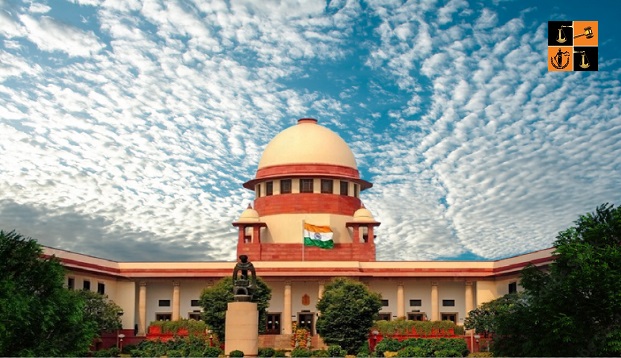
The Supreme Court dismissed an appeal by a woman seeking a Scheduled Caste certificate, despite her claims of being born into the Valluvan caste and following Hindu practices. The Court upheld the rejection of her application, noting that her baptism as a Christian and continued professing of Christianity disqualified her from claiming caste benefits. It ruled that caste membership, once lost through conversion, cannot be restored without genuine reconversion to Hinduism.
Brief Facts:
The appellant, born on 22.11.1990 in Pondicherry, claims to be a Hindu by religion, belonging to the Valluvan Caste (a Scheduled Caste under the S.C. Order, 1964), despite her mother being initially a Christian. After completing her education using the Hindu Adi Dravida quota, the appellant applied for a government post in 2015, where she was selected under the Scheduled Caste category. However, during the certificate verification process, she was asked to provide additional documents confirming her residence and nativity, which led to her seeking a Scheduled Caste certificate.
The authorities rejected her application, citing that she does not profess Hinduism, Buddhism, or Sikhism, and therefore could not receive a Scheduled Caste certificate. Despite filing appeals and receiving directions from the High Court to reconsider her case, her requests were repeatedly rejected. The appellant then approached the Central Administrative Tribunal and, later, filed a writ petition. The High Court dismissed her petition, and the appellant challenged the rejection of her claim for a Scheduled Caste certificate in the Supreme Court.
Contentions of the Petitioner:
The appellant argued that she is a Hindu by religion and belongs to the Valluvan caste, a Scheduled Caste. She claims to have followed Hindu practices since birth and has been treated as a Scheduled Caste member throughout her education. Her family holds Scheduled Caste certificates, and the rejection of her certificate based on her baptism is unjust.
The appellant contended that caste is determined by birth and can be regained upon reconversion to Hinduism, provided the community accepts the individual. Citing case law, she argued that her reconversion entitles her to the Scheduled Caste certificate and that the rejection is arbitrary and unconstitutional.
Contentions of the Respondent:
The respondent argued that an inquiry revealed the appellant’s father is a converted Christian, and the appellant was baptized in 1991. Despite submitting Scheduled Caste certificates, there was a contradiction with the inquiry report and objections from villagers. The Tahsildar ruled that the appellant does not profess Hinduism, thus ineligible for a Scheduled Caste certificate. This decision was upheld by appellate authorities and the High Court. The respondent contended that the decision should not be disturbed.
Observation of the Court:
The Court observed that the field verification clearly established the registration of the marriage under the Indian Christian Marriage Act, 1872, the baptism of the appellant and her brother, and their regular attendance at church. The Court stated, "Any interference with such findings of fact is unwarranted unless the findings are perverse so as to shock the conscience of the Court."
The appellant's argument regarding her baptism when she was less than three months old was not accepted, as the Court noted, "she did not make any attempt to cancel the registration of baptism nor she filed any declaratory suit in this regard."
The Court emphasized that "when the appellant embraced Christianity in 1949, he lost the membership of the Adi Dravida Hindu caste. The Christian religion does not recognise any caste classifications." It also highlighted, "Christianity and Islam are religions prevalent not only in India but also in other countries in the world. We know that in other countries these religions do not recognise a system of castes as an integral part of their creed or tenets."
Further, the Court remarked, "the burden lay on the appellant to establish that, on his reverting to the Hindu religion by professing it again, he also became once again a member of the Adi Dravida Hindu caste." It clarified that, in this case, "the appellant still professes Christianity."
The Court also noted, "if the purpose of conversion is largely to derive the benefits of reservation but not with any actual belief on the other religion, the same cannot be permitted... it would amount to fraud on the Constitution." The dual claim made by the appellant, “that the caste would be under eclipse upon conversion and resumption of the caste upon reconversion, is unsustainable in the facts of the case."
In conclusion, the Court held that the appellant’s attempt to claim a Scheduled Caste certificate while professing Christianity and seeking to avail of reservation benefits was "untenable" and "would go against the very object of reservation."
The decision of the Court:
The Court found no merit in the appeal. Consequently, the appeal was dismissed. Furthermore, the Court decided that no costs would be awarded in the case.
Case Title: C. Selvarani v. The Special Secretary- Cumdistrict Collector And Others
Citation: 2024 Latest Caselaw 737 SC
Case No: Civil Appeal No. 13086 of 2024 (Arising out of SLP (C) No.6728 of 2023)
Coram: Hon’ble Mr. Justice R. Mahadevan
Advocate for Petitioner: Sr. Adv. N. S. Nappinai, Adv. V. Balaji, AOR Rakesh K. Sharma
Advocate for Respondent: AOR. Aravindh S., Adv. Abbas B, Adv. Tharane S
Read Judgment @LatestLaws.com
Picture Source :




















