









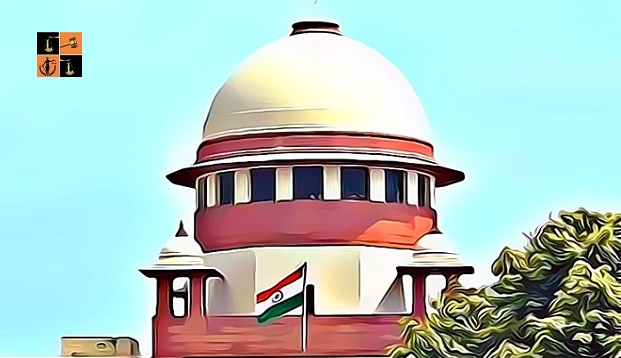
The Division Bench of the Supreme Court consisting of Justices M. R. Shah and B. V. Nagarathna while hearing an appeal held that the Industrial Court committed a grave error and exceeded in its jurisdiction while interfering with the order of dismissal passed by the disciplinary authority, which was not interfered by the Labour Court.
Facts
The respondent herein was serving as a driver and plying passenger buses. When he was driving the bus, it met with an accident with a jeep coming from the opposite direction. It appears that instead of taking the bus to the left side, he took the bus to the extreme right which was the wrong side and as a result, the jeep and the bus collided. The accident resulted in death of four passengers on the spot and six passengers were seriously injured. The jeep was completely damaged and the impact of the collision was so high that the jeep was pushed back by about 25 feet. The bumper of the bus was also crushed. The driver of the jeep also sustained injuries. The respondent was subjected to disciplinary enquiry. On conclusion of enquiry he was dismissed from service. He was also prosecuted for the offence u/s 279 of IPC. However, he came to be acquitted.
Procedural History
The respondent challenged the order of dismissal before the Labour Court. The Labour Court upheld the order of dismissal. In a revision application the Industrial Tribunal considering the acquittal of the respondent in criminal proceedings and observing that the drivers of both the vehicles were negligent (contributory negligence), the Industrial Tribunal exercised powers under item No.1(g) of ScheduleIV of the Maharashtra Recognition of Trade Unions and Prevention of Unfair Labour Practices Act, 1971 (“MRTU” and “PULP Act, 1971”), and held that the order of dismissal is disproportionate to the misconduct proved. Before the Industrial Tribunal the respondent/workman did not press for the back wages. The Industrial Tribunal directed his reinstatement without back wages but with continuity of service. Feeling aggrieved and dissatisfied with the order, the appellant preferred writ petition before the High Court. By the impugned judgment and order the High Court has not only dismissed the writ petition preferred by the appellant but has also directed appellant to pay to the respondent back wages with effect from 01.11.2003 to 31.05.2018 i.e., which is the date of his superannuation. The High Court has also directed that the respondent shall also be entitled to retiral benefits based on continuity of service with effect from date of his dismissal and till his superannuation. Feeling aggrieved and dissatisfied with the impugned judgment and order passed by the High Court, dismissing the writ petition, and confirming the order passed by the Industrial Tribunal setting aside the order of dismissal and ordering reinstatement with continuity of service and back wages, the MSRTC has preferred the present appeal.
Contentions made
Appellant: The Industrial Court committed a grave error in interfering with the order of dismissal passed by the disciplinary authority on the ground that the same is shockingly disproportionate to the misconduct proved. Reliance was placed on Samar Bahadur Singh vs State of U.P. & Ors. and Union of India & Ors. vs Sitaram Mishra & Anr. The Industrial Court and the High Court ought not to have given undue importance to the acquittal of the respondent in the criminal case. The case would not fall under item No.1(g) of Schedule IV of the MRTU and PULP Act, 1971. The Industrial Court specifically observed in the order that the misconduct is not of a minor or technical character. Even the respondent admitted that he was gainfully employed after his dismissal. Therefore, the order of reinstatement was not warranted at all. The directions issued by the High Court directing the appellant to pay to the respondent back wages could not have been passed in a petition filed by the appellant. Hence such an order was as such beyond the scope of the writ petition before the High Court. It was prayed to allow the present appeal.
Respondent: He supported the judgment and order passed by the Industrial Court and confirmed by the High Court and prayed to dismiss the present appeal.
Observations of the Court
The Bench observed that:
“Criminal Court observed that the prosecution failed to prove that the incident occurred due to rash and negligent driving of the accused – respondent herein only and no one else. Therefore, at the best even if it is assumed that even driver of the jeep was also negligent, it can be said to be a case of contributory negligence. That does not mean that the respondent – workman was not at all negligent.”
“The Industrial Court has not interfered with the findings recorded by the disciplinary authority holding charge and misconduct proved in the departmental enquiry, and has interfered with the punishment of dismissal solely on the ground that same is shockingly disproportionate and therefore can be said to be an unfair labour practice as per clause No.1(g) of ScheduleIV of the MRTU & PULP Act, 1971.”
“As per case of the appellant the respondent – workman was in service for three years and during three years’ service tenure he was punished four times. Therefore, it cannot be said that the order of dismissal was without having any regard to the past record of the service of the respondent. Therefore, in the facts and circumstances of the case, the Industrial Court wrongly invoked clause No.1(g) of ScheduleIV of the MRTU & PULP Act, 1971.”
“The respondentadmitted that after the order of dismissal he has been gainfully employed. Therefore, also the reinstatement in service with continuity of service was not warranted.”
“Even the directions issued by the High Court in para 8 in the impugned judgment and order directing the appellant to pay wages to the respondent – workman for the period from 01.11.2003 to 31.05.2018 also could not have been passed by the High Court in a writ petition filed by the appellant.”
Judgment
The judgment and order passed by the Industrial Court and the impugned judgment and order passed by the High Court were quashed and set aside and the judgment and Award passed by the Labour Court in Complaint (ULP) No.96 of 1993 is hereby ordered to be restored. Consequently, the order of dismissal passed by the disciplinary authority dismissing the respondent – workman from service was upheld.
Case Name: Maharashtra State Road Transport Corporation vs Dilip Uttam Jayabhay
Citation: Civil Appeal No.7403 of 2021
Bench: Justice M. R. Shah, Justice B. V. Nagarathna
Decided on: 3rd January 2022
Picture Source :


















