









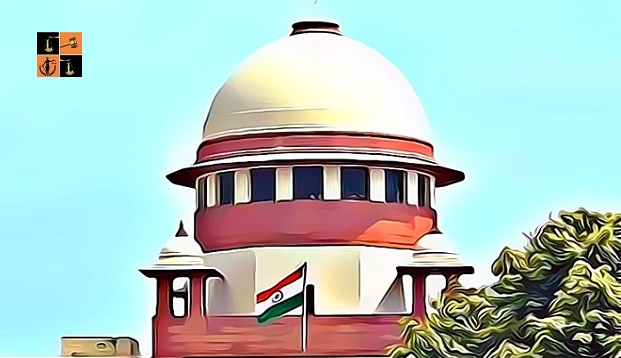
The Three-judge Bench of the Supreme Court consisting of Justices Uday Umesh Lalit, S. Ravindra Bhat and Pamidighantam Sri Narasimha opined that once Section 16 of the Hindu Marriage Act regards a child born from a marriage entered while the earlier marriage is subsisting to be legitimate, it would violate Article 14 if the policy or rule excludes such a child from seeking the benefit of compassionate appointment.
Facts
Jagdish Harijan, an employee of the Indian Railways, had two wives, appellant No.2 (Gayatri Devi, first wife) and Konika Devi (since deceased, his second wife). The appellant No.1 (Mukesh Kumar) is his son through his second wife. Jagdish Harijan died in service and shortly after that, the appellant No.2 made a representation seeking the appointment of appellant No.1 under the scheme for appointments on compassionate grounds. The Respondent-Union rejected the representation as appellant No.1, being the second wife's son, is not entitled to such an appointment.
Procedural History
The departmental appeal came to be dismissed. The appellants filed an original application before the Central Administrative Tribunal which was also dismissed. A writ petition was filed before the High Court questioning the correctness of the decision of the Tribunal, which was again dismissed.
Contentions Made
Appellant: The issue is covered by the decision of this Court in Union of India v. V.R. Tripathi wherein it was held that a child of a second wife of an employee could not be denied compassionate appointment on that ground alone. Reliance was also placed on Namita Goldar and Anr. v. Union of India and Ors.
Respondent: If a legally wedded surviving widow does not want herself to be considered, she cannot nominate the illegitimate sons/daughters of her husband for compassionate appointment. The judgment of this Court relied on by the appellants does not direct appointment but merely provides for consideration of the application.
Observations of the Court
The Bench observed that:
“Once Section 16 of the Hindu Marriage Act regards a child born from a marriage entered while the earlier marriage is subsisting to be legitimate, it would violate Article 14 if the policy or rule excludes such a child from seeking the benefit of compassionate appointment…Exclusion of one class of legitimate children would fail to meet the test of nexus with the object, and it would defeat the purpose of ensuring the dignity of the family of the deceased employee…a policy for compassionate appointment, which has the force of law, must not discriminate on any of the grounds mentioned in Article 16(2), including that of descent. In this regard, ‘descent’ must be understood to encompass the familial origins of a person.5 Familial origins include the validity of the marriage of the parents of a claimant of compassionate appointment and the claimant’s legitimacy as their child. The policy cannot discriminate against a person only on the ground... of descent by classifying children of the deceased employee as legitimate and illegitimate and recognizing only the right of legitimate descendant.”
Judgment
The judgment of the High Court of Judicature at Patna was set aside. It was held that appellant No.1 cannot be denied consideration under the scheme of compassionate appointments only because he is the son of the second wife, there shall be a direction to consider his case as per the extant policy. The Authorities shall be entitled to scrutinize whether the application for compassionate appointment fulfils all other requirements in accordance with the law.
Case Name: Mukesh Kumar & Anr vs The Union of India & Ors.
Citation: CIVIL APPEAL NO. OF 001620-001620/2022
Bench: Justice Uday Umesh Lalit, Justice S. Ravindra Bhat, Justice Pamidighantam Sri Narasimha
Decided on: 24th February 2022
Read Judgment @Latestlaws.com
Picture Source :




















