









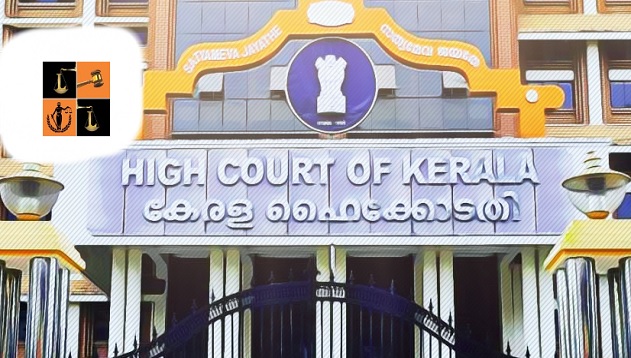
While acquitting a man accused of murder on the ground of negligent evidence, the Kerala High Court recently ruled that the satisfaction of the Court cannot be above expert opinion.
Factual Background
The appellant had been convicted of murdering a retired septuagenarian teacher by smothering her to death and stealing her cash and ornaments. There were two accused in the case, with one still absconding from the law but the petitioner was found guilty of offences under Section 457, 392, 201 and 302 of the IPC.
The trial court had sentenced him to life imprisonment and a fine of Rs. 25,000 for murder, with further sentences and fines for the other offences.
Case of the Accused
The counsel of the accused contended that the charges framed by the prosecution are entirely based on circumstantial evidence and there was not even a single circumstance established proving his guilt.
Case of the Prosecution
The prosecution disagreed with the submissions of the accused and stated that the unbroken chain of circumstances has been proved. She urged for the appeal to be dismissed on the ground that the trial court’s conviction was based on valid grounds and proved circumstances and that the sentence imposed was also proper.
Observation of the Court
After pursuing the materials on record and the arguments advanced, the Court observed that the procedure followed by the prosecution for collection of scientific evidence was grossly inadequate and for the same reason, neither the fingerprint comparison report nor the chemical analysis results of similar fibres were reliable.
“There are no circumstances proved against the accused and he has to be given the benefit of doubt only due to the sloppy manner in which the collection of evidence was carried out by the I.O. We allow the appeal and acquit the accused and he shall be released forthwith if his continued detention is not warranted in any other case”.
“Further the specific similarities which persuades the expert to form an opinion has to be detailed for the Court to compare the prints and come to a conclusion. The procedure followed is grossly inadequate to inspire the confidence of the Court and the report is inadmissible in evidence”.
Finding that none of the circumstances as stated by the prosecution has been established to prove the crime has been committed by the accused, the Court acquitted the appellant.
Case Details
Before: Kerala High Court
Case Title: Biju Kumar v. State of Kerala
Coram: Hon’ble Mr. Justice K.Vinod Chandran and Justice C. Jayachandran
Read Order@LatestLaws.com
Picture Source :


















