









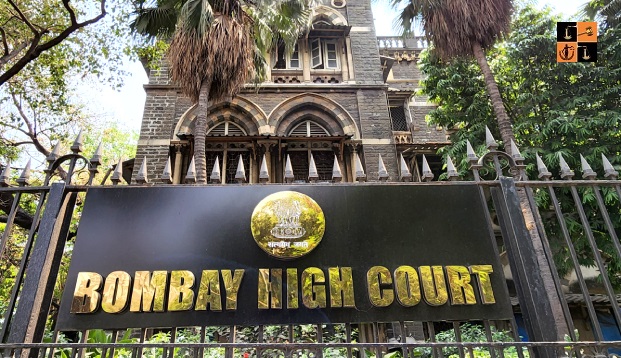
Recently, the Bombay High Court allowed the State’s application under Section 33(1) of the Aadhaar (Targeted Delivery of Financial and Other Subsidies, Benefits and Services) Act, 2016, directing the Unique Identification Authority of India (UIDAI) to provide demographic information and details of the enrolment agency related to an Aadhaar card issued to a foreign national. The decision was taken in the context of ongoing criminal investigations, with the court observing that disclosure of such information, in this instance, did not violate the fundamental right to privacy of the individual concerned.
Brief Facts:
The matter arose when the Anti-Narcotic Cell of Panaji registered a case against a foreign national for possession of illegal drugs. During investigation, it was discovered that the individual, an Israeli national, was residing in India without valid travel documents but had been issued an Aadhaar card. The authorities raised concerns regarding how a foreign national without valid residence could obtain an Aadhaar card, which is only issued to residents of India. Given his history of criminal involvement and multiple cases pending or previously convicted, the State sought access to the demographic information submitted by the individual at the time of Aadhaar enrolment, as well as details of the enrolment agency.
Contentions of the Petitioner:
The State, through the Public Prosecutor, argued that access to the Aadhaar-related information was critical for investigation into offences under the NDPS Act and the Foreigners Act, highlighting the potential misuse of the Aadhaar card by an individual without valid residence. It was contended that the individual’s Aadhaar was obtained without proper authorization, which had wider implications for national security and law enforcement.
Contentions of the Respondent:
The counsel for the foreign national opposed the application, asserting that disclosure of biometric and demographic information would infringe upon his fundamental right to privacy under Article 21 of the Constitution. Reliance was placed on the Top Court’s ruling in K.S. Puttaswamy (RTD) v. Union of India, emphasizing that any interference with personal information must meet the three-fold test of legality, necessity, and proportionality.
Observations of the Court:
The High Court examined the documents submitted by the UIDAI under sealed cover, including proof of identity, address, and birth certified by a Gazetted Officer. The Court noted that these documents did not constitute personal documents beyond what was already submitted for Aadhaar enrolment. It emphasized that disclosure of these specific details was necessary for the investigation and did not amount to a violation of privacy, as the information pertained solely to verification of residence eligibility at the time of Aadhaar issuance.
Further, the Court further highlighted that the individual had obtained the Aadhaar without valid travel documents, and investigation into the circumstances was essential given his criminal background and ongoing cases.
The bench clarified that while the right to privacy is fundamental, it is not absolute and must be balanced against the State’s duty to ensure law and order. In this case, the relevance of the information to the investigation outweighed privacy concerns, especially considering the potential misuse of the Aadhaar card by a non-resident.
The decision of the Court:
The Court allowed the application under Section 33(1) of the Aadhaar Act. It directed the UIDAI to provide the demographic information of the individual and the details of the enrolment agency through which the Aadhaar enrolment was conducted. The information was to be provided within two weeks under a sealed cover, ensuring confidentiality while enabling the State to continue its investigation effectively. The Court made the rule absolute, underscoring the careful balance between privacy rights and public interest in criminal investigations.
Case Title: State of Goa Vs. Unique Identification Authority of India & Ors.
Case No.: Criminal Application (Main) no.13 of 2025
Coram: Justice Valmiki Menezes
Advocate for Petitioner: Adv. S.G. Bhobe
Advocate for Respondent: Adv. Omkar Bhave
Picture Source :



















