









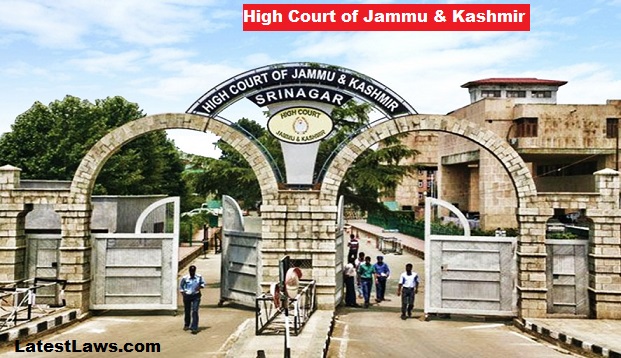
In a significant judgment examining the principles governing back wages upon reinstatement, the High Court of Jammu & Kashmir and Ladakh delved into whether an employee reinstated after termination, based on benefit of doubt rather than full exoneration, is entitled to full back wages. The case raised critical questions about the interplay between wrongful termination, burden of proof for gainful employment, and the financial capacity of a public corporation. Read on to see how the Court weighed fairness, precedent, and public interest in resolving this long-pending employment dispute.
Brief facts:
The case arose from the termination of Mohammad Ayoub Shah, a conductor with the J&K Road Transport Corporation (J&K RTC), following allegations that 22 passengers were travelling without tickets on a bus under his charge. Shah challenged his dismissal. The High Court disposed of the petition, directing the Corporation to conduct a fresh inquiry within six weeks, failing which Shah was to be reinstated.
Pursuant to the Court's direction, an inquiry was conducted by the Deputy General Manager (P&S), who recommended reinstatement, granting Shah the benefit of doubt due to lack of sufficient evidence. He was reinstated, however, the period from 21 August 1987 to 22 July 1999 was treated as dies non, and wages for this duration were denied on the principle of "no work, no wages."
Shah later challenged this denial of back wages. During its pendency, he passed away and was substituted by his legal heirs. The Single Judge allowed the petition, granting back wages, which led the J&K RTC to file the present appeal before the Division Bench, seeking to set aside the judgment.
Contentions of the Appellant:
The appellants argued that reinstatement does not automatically entitle an employee to back wages, particularly when no work was performed during the period in question. It was submitted that Shah failed to prove he was not gainfully employed between 21 August 1987 and 22 July 1999, as required under law. Reliance was placed on Ramesh Chand v. Management of Delhi Transport Corporation. Additionally, it was contended that awarding full back wages for nearly 12 years would impose a heavy financial burden on the already struggling J&K RTC and would not serve the public interest.
Contentions of the Respondent:
The respondents contended that Shah, having been exonerated in the departmental inquiry and reinstated, was entitled to full back wages. Reliance was placed on Chief Regional Manager, United India Insurance Co. Ltd. v. Siraj Uddin Khan, in support of this claim. It was further submitted that the termination was illegal and unjustified, and that denying back wages would amount to penalising Shah for the Corporation’s wrongful act in preventing him from discharging his duties.
Observations of the Court:
The Division Bench comprising Justice Sanjeev Kumar and Justice Sanjay Parihar observed, “The appellants have pleaded that the financial health of the appellant-Corporation is in doldrums and burdening the corporation with the payment of huge arrears of the salary to the original writ petitioner, who has not rendered any work during the intervening period of almost 12 years, would be against public interest and tell upon heavily on the financial health of the corporation. This averment of the appellant has gone un-rebutted. Admittedly it is one of the factors to be taken into consideration while taking a decision with regard to grant of back wages.”
The Court framed the principal issue as, “Whether an employee, whose termination from services either by dismissal, discharge or even retrenchment, is either held invalid by a competent court of law or withdrawn by the employer itself, is reinstated with continuity of service, is entitled to back wages i.e., the wages for period with effect from his termination till his reinstatement in service.”
The Bench reaffirmed that while reinstatement with back wages is ordinarily the rule in cases of illegal termination, it is not an automatic consequence and must be decided based on the facts of each case. Referring to Hindustan Tin Works Pvt. Ltd. v. The Employees, the Court noted the settled principle that “ordinarily the workman whose services have been illegally terminated would be entitled to full back wages on reinstatement except to the extent he was gainfully employed during his forced idleness.” However, the Court acknowledged the jurisprudential divergence on the burden of proof, some decisions place the initial burden on the employee, while others require the employer to establish that the employee was gainfully employed.
In Surendra Kumar Verma v. Central Industrial Tribunal-cum-Labour Court, the Apex Court had held that “plain common sense dictates that the removal of an order terminating the services of workman must ordinarily lead to the reinstatement of the services of the workman. It is as if the order has never been and so it must ordinarily lead to back wages too.” Nonetheless, the Court clarified that exceptions could apply where the employer demonstrates financial hardship or the employee had alternate employment.
The Court also relied on Deepali Gundu Surwase v. Kranti Junior Adhyapak Mahavidyalaya, wherein it was held that “in cases of wrongful termination of service, reinstatement with continuity of service and back wages is the normal rule,” and that once an employee asserts non-employment, the burden shifts to the employer.
Applying these principles, the Court noted that Shah had been reinstated on the basis of the benefit of doubt, rather than full exoneration. The inquiry report, though lacking conclusive proof of misconduct, cast doubt on his conduct. Importantly, Shah had not pleaded or proven non-employment during the 12-year period of ouster, thereby relieving the appellants of the evidentiary burden. The Court further took into account the Corporation’s unchallenged claim of financial distress, which weighed against granting full back wages.
However, recognising the ambiguity in law regarding the burden of proof, the Court observed that “mere fact that he filed the writ petition seeking back wages raises the presumption that the original writ petitioner was not gainfully employed or that he could not earn the wages equal to the wages he was being paid at the time of his termination from service.”
Striking a balance between fairness to the employee and the employer’s constraints, the Court exercised its discretion guided by “justice, equity and good conscience,” and awarded 50% of the back wages. It emphasised that the discretion to grant such relief must be “judicial and judicious, informed by cogent and convincing reasons,” and not rendered mechanically.
The decision of the Court:
In view of the foregoing discussion, the Court modified the order of the Single Judge and held that the original writ petitioner was entitled to 50% of the back wages for the period from 21 August 1987 to 22 July 1999. The J&K Road Transport Corporation was directed to release the said amount to the respondents within three months from 11 July 2025, failing which the entire arrears would carry interest at 6% per annum from the date of default.
Case Title: Managing Director, J&K Road Transport Corporation and Ors. Vs. Shareefa and Ors.
Case No.: LPA No. 263/2023
Coram: Justice Sanjeev Kumar and Justice Sanjay Parihar
Advocate for Appellant: Sr. Adv. Altaf Haqani and Adv. Asif Wani
Advocate for Respondent: Adv. Asma Rashid
Picture Source :




















