









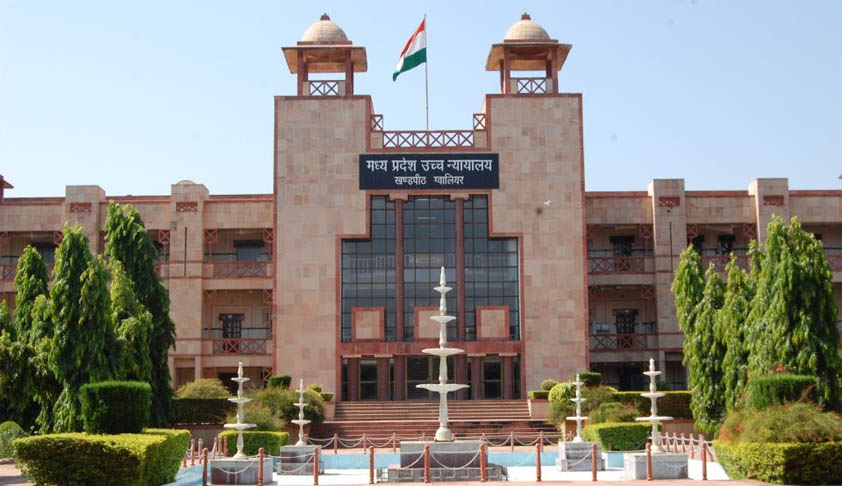
The Madhya Pradesh High Court recently comprising of a bench of Justice Subodh Abhyankar quashed an externment order passed against a man by holding that natural justice principles were violated as the man wasn't given sufficient time to produce the orders of acquittal in the cases in which he was already acquitted. (Raju @ Pushpendra Bhadoriya v. Collector/District Magistrate, Indore & Ors.)
The Bench also noted that if the man had been given an opportunity to produce the copies of acquittal orders passed in his favor, then the result of the outcome could have been different.
Facts of the case
An externment order was passed against one Pushpendra Bhadoriya by Collector/District Magistrate, Indore externing him from the limits of District Indore as also the adjoining Districts.
The order was passed on a recommendation made by the Superintendent of Police, West Zone, Indore on the ground that the petitioner is involved in various criminal activities since 1998, which has led to fear in the minds of the public and the public at large is also afraid to lodge any report against him.
When he was given a show-cause notice, the petitioner in his written submissions, sought time to file the orders of acquittal in the criminal cases, which have been registered against him as he could not obtain the certified copies in time owing to summer vacation as also the Covid-19 restrictions.
However, without giving him sufficient time, the externment order was passed against and challenging the same,this petition was filed by the petitioner Raju @ Pushpendra Bhadoriya against the order of externment passed by the respondent No.1 – Collector/District Magistrate, Indore wherein the respondent has externed the petitioner from the limits of District Indore as also the adjoining Districts.
He had alleged that he had been deprived of proper hearing by the respondent and principles of natural justice have been violated.
Contention of the Parties
The counsel for the petitioner has submitted that in the impugned order the District Magistrate has referred to all the criminal cases registered against the petitioner and has come to a conclusion that along with his reply, the petitioner has filed only one order of acquittal and the respondents have placed on record then documents regarding all the cases registered against the petitioner, which shows that he is still involved in criminal activities.
The Counsel has also submitted that no witness has been examined in the present case and only S.P.'s report has been made the basis to extern the petitioner.
Counsel for the respondents/State, on the other hand, has opposed the prayer and it is submitted that no case for interference is made out as the petition is misconceived for the reason that an efficacious alternative statutory remedy of appeal under the provisions of Section 9 of the M.P. Rajya Surakhsa Adhiniyam, 1990 is available to the petitioner and by circumventing the aforesaid remedy available to him under the law, this petition has been filed, which is liable to be dismissed on this ground only.
Court's observations and Judgment
At the outset, the Court noted that the impugned externment order revealed that the District Magistrate had made it a ground that since the petitioner had not filed the orders of acquittal passed in his favour, therefore, the cases enumerated by the S.P. in his recommendation were relied upon.
However, the Court did note that in fact the petitioner wasn't given sufficient time to produce the acquittal orders passed in his favour exonerating him from some of the criminal cases lodged against him.
This Court also found that before passing the impugned order, the District Magistrate had not recorded the statement of any person from the area, who could say that he is afraid to go to the police station only on account of the terror or influence exercised by the petitioner.
The Court taking note of the above observations quashed the externment order dated September 17, 2021, by holding that even if the petitioner had not availed the remedy of appeal (against the externment order), his petition under Article 226 of the Constitution of India was maintainable.
The bench quashing the order remarked, "So far as the contention that the order of externment cannot be passed in respect of other adjoining district is concerned, this court is not required to dwell upon the same as the impugned order is liable to be quashed on the ground of violation of principles of natural justice"
Picture Source :



















