









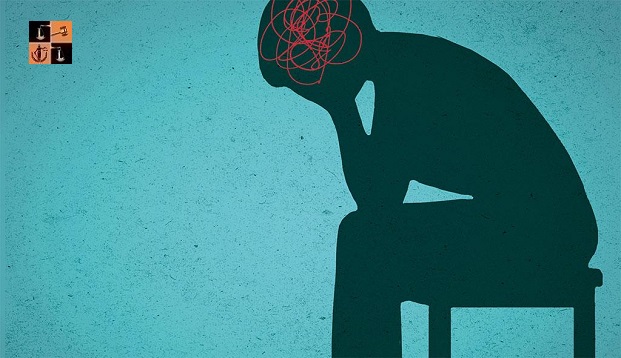
In a significant matrimonial dispute, the Delhi High Court examined the contours of cruelty under the Hindu Marriage Act, 1955, addressing whether sustained abusive, humiliating, and harassing conduct by one spouse can constitute mental cruelty sufficient to dissolve a marriage. The key issue before the Court was how to differentiate between ordinary marital discord and legally cognizable cruelty, and what evidentiary standard must be met to prove such cruelty in the context of prolonged conflicts, repeated complaints, and allegations of physical and mental harassment. Read on to explore how the Court navigated these sensitive issues and articulated the legal boundaries of cruelty in matrimonial relationships.
Brief Facts:
The case arose from a marriage solemnized under Hindu rites, which produced a male child. The couple initially lived together but soon faced marital discord. The husband alleged that the wife was quarrelsome and caused estrangement from his family, prompting relocation, while the wife claimed continuous dowry demands, ill-treatment, and being forcibly turned out during pregnancy, with her family paying substantial amounts for the husband’s clinic and other demands. Over the years, tensions escalated with mutual complaints of harassment, cruelty, infidelity, assault, and property disputes. The husband filed for divorce on grounds of cruelty and desertion, while the wife lodged multiple complaints alleging dowry harassment, illicit relationships, abuse, threats, bigamy, and sought restitution of conjugal rights. After examining evidence, the family court dissolved the marriage on the grounds of cruelty but rejected the claim of desertion, prompting the wife to appeal in the present Court.
Contentions of the Appellant:
The Appellant contended that the judgment suffers from serious infirmities, as the Respondent failed to discharge the burden of proof under Section 13(1)(ia) of the HMA. The Court erred in assuming that the Appellant’s inability to fully establish her defence automatically proved the Respondent’s case, as matrimonial relief requires positive and independent proof of cruelty. It was further argued that reliance on “irretrievable breakdown of marriage” was misplaced, being unrecognized under the HMA, and that the Respondent, guilty of neglect, misconduct, and repeated dowry demands, including turning out the Appellant during pregnancy and compelling payments, cannot claim relief on the ground of cruelty. The Appellant emphasized that her complaints of harassment and the Respondent’s illicit relations were bona fide attempts to protect her rights, and filing such complaints does not constitute cruelty unless proven false and malicious. The Court’s reliance on isolated incidents ignored the broader context, and in the absence of consistent and credible evidence, the finding of cruelty is unsustainable.
Contentions of the Respondent:
The Respondent contended that the divorce decree was rightly granted, as the Appellant’s conduct throughout the marriage was abusive, disrespectful, and cumulatively caused grave mental cruelty. The Respondent pointed to incidents of verbal abuse, suspicion, repeated ousting from the matrimonial home, and seizure of personal belongings, which led to estrangement from his family and closure of his clinic. It was further submitted that the Appellant, along with relatives, forcibly entered the Respondent’s clinic, assaulted him, and caused property damage, demonstrating serious cruelty. The Appellant’s repeated lodging of complaints, criminal proceedings, and domestic violence claims against the Respondent and his family caused immense mental agony, harassment, and social humiliation. The Respondent denied allegations of dowry demands and illicit relationships, asserting that making unproven accusations itself constitutes mental cruelty by tarnishing reputation. The Respondent also argued that the marriage had irretrievably broken down due to prolonged separation and failed reconciliation efforts, justifying dissolution on the ground of cruelty.
Observation of the Court:
The Court upheld the Family Court's dissolution of marriage on grounds of cruelty under Section 13(1)(ia) of the Hindu Marriage Act, 1955, emphasizing that the Appellant’s conduct inflicted grave mental and physical cruelty on the Respondent. Relying on the Supreme Court's seminal ruling in Samar Ghosh v. Jaya Ghosh, the Court reproduced key principles, stating that "Mental cruelty is a state of mind. The feeling of deep anguish, disappointment, frustration in one spouse caused by the conduct of other for a long time may lead to mental cruelty" and "A sustained course of abusive and humiliating treatment calculated to torture, discommode or render miserable life of the spouse" constitutes cruelty, while highlighting that human behavior varies with individual temperament, upbringing, education, cultural background, social status, and value systems, requiring each case to be adjudicated on its facts.
Referring to the case V. Bhagat v. D. Bhagat, the Court clarified that mental cruelty involves "that conduct which inflicts upon the other party such mental pain and suffering as would make it not possible for that party to live with the other," assessed based on the partie's social and educational background. Further, while drawing from Parveen Mehta v. Inderjit Mehta, it stressed that cruelty must be evaluated cumulatively, as "Mental cruelty is a state of mind and feeling with one of the spouse due to the behaviour or behavioural pattern by the other." The Court applied these principles to the facts, finding the incident of April 2013, where the wife allegedly assaulted the husband at his clinic, causing injuries and property damage worth Rs. 30,000/- as an act of grave physical cruelty, wholly unjustifiable and impermissible in matrimonial relations, as "physical violence of any kind, whether by a husband or wife, is wholly impermissible in a matrimonial relationship and cannot be condoned."
On constitutional issues, while acknowledging that irretrievable breakdown is not a statutory ground under the HMA and falls under Article 142 of the Constitution powers of the Supreme Court, the prolonged separation of over a decade and failed reconciliation efforts reinforced the cruelty, making continuance of the marriage intolerable, as per K. Srinivas Rao v. D.A. Deepa, where "Irretrievable breakdown of marriage is not a ground for divorce under the Hindu Marriage Act, 1955. But, where marriage is beyond repair on account of bitterness created by the acts of the husband or the wife or of both, the courts have always taken irretrievable breakdown of marriage as a very weighty circumstance amongst others necessitating severance of marital tie."
The Court rejected the Appellant's arguments on burden of proof, own wrongs under Section 23(1)(a) HMA, and bona fide legal remedies, holding that unsubstantiated allegations and vexatious litigations cannot be justified as protecting matrimonial rights, and the respondent had discharged his burden through consistent evidence. In the ultimate analysis, the Court concluded that "the respondent wife has caused by her conduct mental cruelty to the appellant husband and the marriage has irretrievably broken down," affirming the decree as the appellant's vindictive and reckless conduct established cruelty beyond ordinary marital discord, tarnishing the husband's reputation and causing sustained harassment.
The decision of the Court:
In the light of the foregoing discussion, the Court dismissed the appeal, and the judgment and decree of the Family Court dissolving the marriage on the ground of cruelty under Section 13(1)(ia) of the Hindu Marriage Act, 1955, are upheld.
Case Title: X vs. Y
Case No: MAT.APP.(F.C.) 142/2022
Coram: Hon’ble Mr. Justice Anil Kshetarpal, Hon’ble Mr. Justice Harish Vaidyanathan Shankar
Advocate for Appellant: Adv. Mansi Sharma
Advocate for Respondent: Advs. Tej Pratap, Illashree, Imtiyaz Hussain
Picture Source :




















