









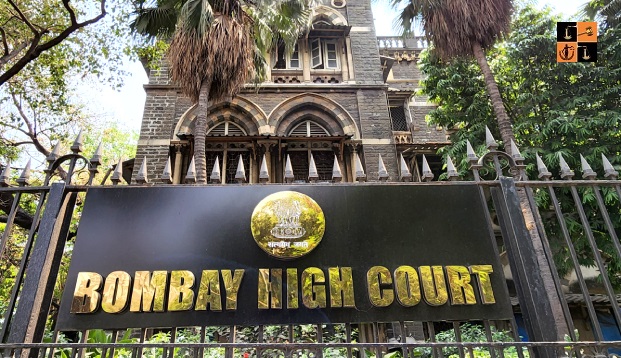
Recently, the Bombay High Court examined a writ petition filed by an insurance company challenging concurrent findings of the consumer fora, where it had been directed to honour an insurance claim arising from flood damage. The dispute primarily revolved around alleged dishonour of the premium cheque, limitation under consumer law, and the applicability of statutory provisions governing assumption of insurance risk.
Brief Facts:
The case arose from a Standard Fire and Special Perils Policy issued by the insurer in favour of a cooperative housing society. Before the expiry of the existing policy, the society paid the renewal premium by cheque, which was accepted by the insurer, followed by the issuance of a renewed policy. Subsequently, severe flooding caused damage to the insured property, leading the society to lodge a claim. The insurer later asserted that the premium cheque had been dishonoured and claimed cancellation of the policy. The society disputed this assertion, stating that sufficient funds were available and that the cheque was not cleared due to banking disruption caused by floods. The State Consumer Commission partly allowed the complaint, while the National Consumer Disputes Redressal Commission directed the insurer to honour the policy and pay compensation, giving rise to the present challenge.
Contentions of the Petitioner:
The counsel for the Petitioner contended that the consumer complaint was barred by limitation under Section 24A of the Consumer Protection Act, 1986, as the cause of action allegedly arose when the policy stood repudiated. It was argued that the consumer fora failed to independently examine limitation, which is a mixed question of law and fact. The counsel further relied on Section 64VB of the Insurance Act, 1938, asserting that no risk can be assumed unless a premium is actually received, and since the cheque was dishonoured, there was a failure of consideration and no enforceable insurance contract. The Petitioner also submitted that correspondence with the surveyor could not be treated as an acknowledgment of liability or waiver of statutory requirements.
Contentions of the Respondents:
The counsel for the Respondent society argued that the premium cheque was issued well within time and duly accepted by the insurer, which itself issued the renewed policy, thereby assuming risk in compliance with Section 64VB of the Insurance Act, 1938. The counsel contended that the alleged dishonour was not due to insufficiency of funds but due to technical and infrastructural banking failures during floods, as confirmed by the bank. The society emphasised that the insurer continued processing the claim and pursued the surveyor, demonstrating that the policy was never genuinely repudiated. The Respondent further argued that the cause of action remained continuous, keeping the complaint within limitation under Section 24A of the Consumer Protection Act, 1986, and that the insurer’s conduct amounted to a clear deficiency in service
Observation of the Court:
The Court found that the insurer’s plea of repudiation was inconsistent with its own conduct on record. The Court noted that despite claiming cancellation of the policy, the insurer continued to process the claim and actively pursued its surveyor. Emphasising this contradiction, the Court observed that “Had the insurance policy been cancelled, there would have been no question of processing the claim or following up with the Surveyor to furnish the survey report.”
On the issue of limitation under Section 24A of the Consumer Protection Act, 1986, the Court held that limitation is a mixed question of law and fact and cannot be examined in isolation. Taking note of the insurer’s silence and continued engagement with the claim, the Court categorically stated that “All of this leads to a reasonable preponderance of probability that the insurer’s claim of repudiation does not inspire confidence.”
While dealing with the insurer’s reliance on Section 64VB of the Insurance Act, 1938, the Court clarified that the statutory requirement is satisfied once the premium cheque is received before assumption of risk. Criticising the insurer’s delayed banking of the cheque, the Court held that “If an insurer’s manner of handling the premium cheque is negligent, it would be self-serving for the insurer to seek to exploit the same to repudiate the claim.”
The Court further underscored the consumer-centric nature of the legislation, holding that technical objections cannot be permitted to defeat legitimate claims. It remarked that raising limitation at a belated stage, after participating in proceedings without objection, was impermissible and unfair, reinforcing that such conduct amounted to clear deficiency in service
The decision of the Court:
The Court dismissed the writ petition, upholding the National Commission’s order. It found no perversity in the findings on limitation or policy validity and held the insurer guilty of deficiency in service. The insurer was directed to comply with the award and pay costs.
Case Title: New India Assurance Co. Ltd. Through its Regional Office No. 2 Vs Gayatridham Phase Co-op. Housing Society & Anr.
Case No.: WP No. 12510 OF 2024
Coram: Hon’ble Mr Justice Somasekhar Sundaresan
Counsel for the Petitioner: Adv. Rushabh Vidyarthi
Counsel for the Respondent: Adv. Ashutosh Marathe, Adv. Ajit M. Savagave, Adv. Savina Crasto
Read Judgement @LatestLaws.com
Picture Source :




















