









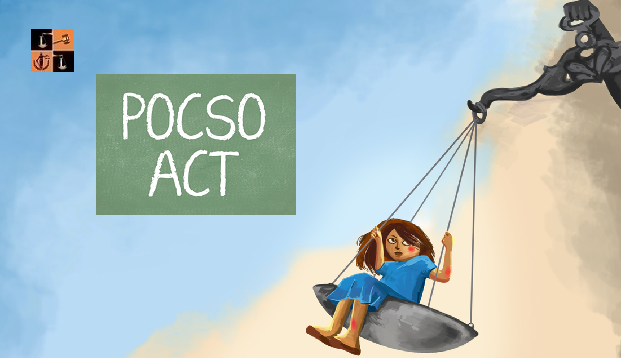
Recently, the Chhattisgarh High Court dismissed the State’s appeal against the acquittal of the respondent in a POCSO case. The Court held that the trial court’s finding was based on a reasonable evaluation of evidence, and in the absence of compelling or substantial reasons, no interference was warranted.
Brief Facts:
The State filed the present appeal against the judgment dated 31.01.2019 passed by the Special Judge. The respondent was acquitted of charges under Sections 456 and 354 (twice) of the Indian Penal Code (IPC) and in the alternative, Section 8 (twice) of the Protection of Children from Sexual Offences Act, 2012 (POCSO Act). As per the prosecution, when the victim had gone to a boring near her house, the accused allegedly tried to molest her by forcefully grabbing her hands and pressing her chest. On her shout, her father arrived, and the accused fled the spot. An FIR was registered, and a charge sheet was subsequently filed. The trial court, after evaluating the evidence of 10 prosecution witnesses, found inconsistencies in the testimonies and acquitted the respondent.
Contentions of the Appellant:
The learned State counsel argued that the trial court erred in appreciating the evidence and overlooked the categorical statements of the victim and her father regarding the accused’s conduct. It was submitted that the prosecution had proved its case, and the acquittal was unjustified.
Contentions of the Respondent:
The learned counsel for the respondent supported the trial court's judgment, arguing that the evidence of the prosecution witnesses was inconsistent and that the court rightly extended the benefit of doubt.
Observations of the Court:
The Court noted that in a matter of appeal against acquittal, the High Court should not ordinarily set aside a judgment of acquittal in a case where two views are possible, although the view of the Appellate Court is a more probable one. The victim’s uncle claimed that both parents reached the spot after the incident, but the victim’s father did not corroborate this.
The Court observed that the paramount consideration of the Court is to ensure that a miscarriage of justice is prevented. A miscarriage of justice, which may arise from the acquittal of the guilty, is no less than from the conviction of an innocent. In case where admissible evidence is ignored, a duty is cast upon the appellate Court to re-appreciate the evidence where the accused has been acquitted for the purpose of ascertaining whether any of the accused really committed any offence or not.
Decision of the Court:
The Chhattisgarh High Court, dismissing the appeal, held that there was no error in the trial court’s appreciation of evidence, and the judgment of acquittal did not require interference.’
Case Title: State of Chhattisgarh vs. Rajkumar Patle @ Khanna
Coram: Hon’ble Justice Deepak Kumar Tiwari
Case No.: ACQA No. 600 of 2019
Advocate for the Appellant: Mr. Arvind Dubey, Government Advocate
Advocate for the Respondent: Mr. Dharmesh Shrivastava
Picture Source :




















