









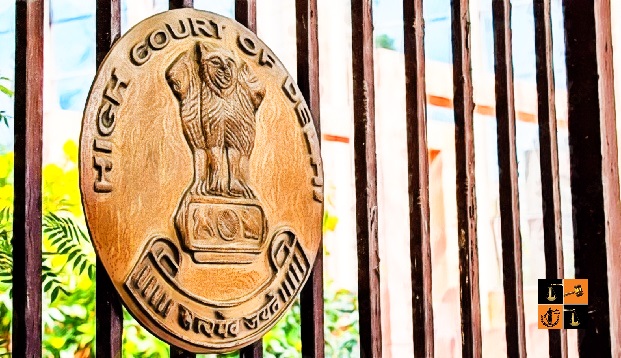
Recently, the Delhi High Court unequivocally ruled that the right of the pledgee to sell pledged shares in the event of a default to repay a loan is secondary to the pledgor's right to redeem those shares as stipulated under Section 177 of the Indian Contract Act.
Brief Facts of the Case:
The case involves three petitioners: DLF, Chinsha Property, and Hubtown, who were shareholders in a company called JHL. These three shareholders collectively held 100% of JHL's shareholding, with ownership distributed among them in a ratio of 37.5%, 37.5%, and 25% respectively.
JHL had obtained a substantial loan of Rs. 800 Crores from Punjab National Bank, as per a Loan Agreement dated 20.12.2017. Although the petitioners were not party to this agreement, they were categorized as 'Promoters' of Punjab National Bank.
To secure this loan, JHL had created a mortgage in favour of Punjab National Bank, and additionally, the entire shareholding of JHL was pledged as security for the loan amount. Three separate Share Pledge Agreements (SPA) dated 26.12.2017 were executed between the shareholders (the petitioners) and Punjab National Bank, with Clause 17.11 of the agreement providing for dispute resolution through arbitration.
Unfortunately, JHL failed to repay the loan amount, resulting in the loan being declared a Non-Performing Asset. Punjab National Bank initiated the recovery process under the SARFAESI Act, 2002, which included issuing notices of demand, possession, and sale.
However, the auction under the SARFAESI Act did not yield successful bids, leading Punjab National Bank to issue a notice under Clause 6 of the SPA, indicating its intention to invoke the pledge and sell the pledged shares. Simultaneously, it issued a notice of redemption to the shareholders (including the petitioners), offering them the right of first refusal. The sale price for the entire shareholding was set at Rs. 1075 Crores.
In response to this, petitioner no. 1 (DLF) exercised its right of redemption by offering an amount of Rs. 1450 to acquire the entire shareholding of JHL. However, Punjab National Bank failed to respond to this offer.
Subsequently, Punjab National Bank issued a public notice seeking interest from prospective bidders for the assignment of the loan. The loan was eventually assigned to respondent No. 2, Omkara Asset Reconstruction. Respondent no. 2, in a letter dated 06.09.2023, informed the petitioners about the sale of their pledged shares to an undisclosed third party for an undisclosed sum, effectively clearing the account.
Aggrieved by the sale of their shares in JHL, the petitioners invoked the arbitration clause and approached the court, seeking disclosure of the identity of the transferee(s) of the shares and a restraining order against the transferees from further creating any third-party interest.
Contentions of the Parties:
Petitioners' Contentions: The sale of the shares was not bona fide and was a collusive act between Punjab National Bank and the parties involved in the loan transaction. The assignment of the loan was rushed through suspiciously. A public notice for the sale of the financial asset was issued with a very short deadline for prospective bidders to submit bids, raising questions about the fairness of the process.
Respondents' Contentions: The petition is viewed as an attempt by the petitioners to obstruct the bank's efforts to recover the outstanding loan amount, which is public money. The petitioners, as promoters of a defaulting borrower company, cannot acquire the pledged shares, as this action is prohibited by RBI guidelines.
Observations by the Court:
The court began by emphasizing the paramount importance of the right to redemption under Section 177 of the Indian Contract Act. It stressed that the right of the pledgee (Punjab National Bank) to sell pledged shares due to a loan default is subservient to the right of the pledgor (the petitioners) to redeem those shares under Section 177.
The court's decision is rooted in the interpretation of contract law, specifically Section 177 of the Indian Contract Act. The court found that this legal provision establishes the primacy of the pledgor's right to redeem pledged shares. The pledgee's right to sell the shares is contingent upon the pledgor's default on the loan, and even in such circumstances, the pledgee must consider the pledgor's offer for redemption.
The court also recognized the unique nature of shares in a company. It stressed that shares represent not only a financial interest but also control and ownership in a business. This control and ownership are invaluable due to the substantial time and effort invested in building a company and the goodwill associated with it. Consequently, the court concluded that the loss resulting from the sale of pledged shares extends beyond monetary compensation; it encompasses the loss of control and ownership, which cannot be adequately quantified in financial terms.
The court further clarified that under Section 9 of the Arbitration and Conciliation Act, it can protect the subject matter of arbitration and grant an injunction in favour of the pledgor if the sale of pledged shares appears to violate Section 177 of the Indian Contract Act. This serves as a safeguard to ensure the integrity of the pledgor's rights and the sanctity of contractual agreements.
Case Name: DLF Limited v. PNB Housing Finance Limited
Coram: Justice Manoj Kumar Ohri
Case No.: OMP(I)(COMM) 296 of 2023
Advocates of the Petitioners: Mr. Rajiv Nayar, Sr. Advocate with Ms. Ruby Singh Ahuja, Mr. Pravin Bahadur, Mr. Vishal Gehrana, Mr. Isham Gaur, Ms. Manjira Dasgupta, Ms. Aakriti Vohra, Ms. Kanika Gumber, Mr. Saurabh Kumar and Ms. Megha Dugar, Advocates for Petitioner No. 1
Advocates of the Respondent: Mr. Parag Tripathi, Sr. Advocate, Mr. Dayan Krishnan, Sr. Advocate, Mr. Jayant Mehta, Sr. Advocate with Ms. Vasundhra Bhakru, Mr. Rajat Juneja, Mr. Vijay Nair, Mr. Arpit Dwivedi, Advocates for respondent No.2 Mr. Arun Kathpalia, Sr. Advocate with Mr. Nirav Shah, Ms. Aneesa Cheema, Mr. Nishant C., Mr. Sajit S., Mr. Varun Kalra and Mr. Krishan Kumar, Advocates for respondent No.4
Read Judgment @LatestLaws.com
Picture Source :




















