









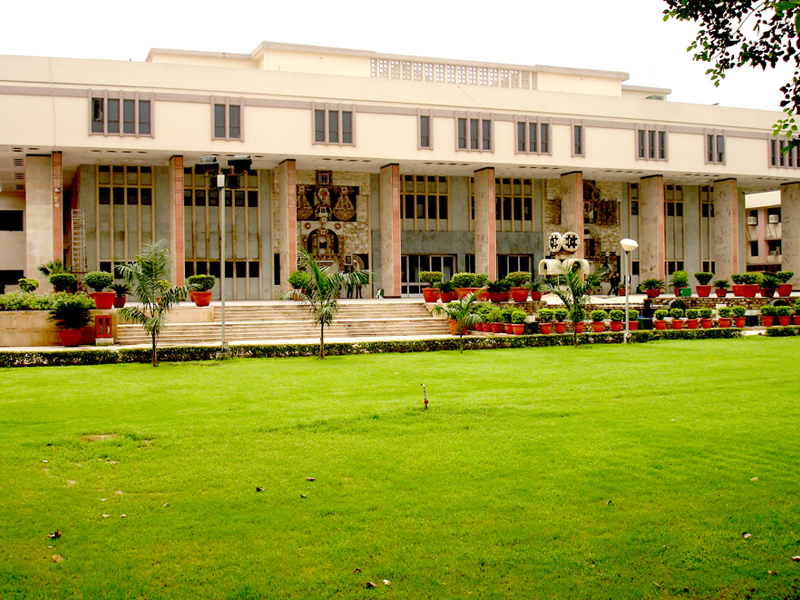
High Court of Delhi was dealing with the petition where applicant by this application Under Order 9 rule 13 C.P.C., seeks setting aside of order dated 07.05.2021 whereby an arbitral tribunal constituted by a sole arbitrator was appointed to adjudicate the disputes between the parties.
Petitioner’s Contention:
Learned counsel for the petitioner submitted that respondent does not have the funds to pay. He submitted that respondent has initiated the proceedings before the Insolvency Court only to try and defeat the rights of the petitioner to recover his money.
Respondent’s Contention:
Learned Counsel for the respondent submitted that respondent has already initiated proceedings for being declared as an insolvent under the Provincial Insolvency Act, 1920. He submitted that an order of admission has been passed on 01.11.2019 and as such the proceedings before the arbitral tribunal cannot continue.
He further submitted that under Sections 4 & 5 of the Insolvency Act, petitioner could have approached the concerned Insolvency Court for appropriate orders for continuance of proceedings. It was contended that the proceedings would be hit by Section 10 CPC as the insolvency petition filed by the respondent before the Insolvency Court is a prior petition in point of time.
HC’s Observations:
After hearing both the sides Court stated that the fact that this petition was listed during the lockdown period and respondent had been appearing shows that the plea raised by the respondent for not appearing on 07.05.2021 that he was under an impression that only urgent matter was being taken up, is not sustainable.
HC stated that Section 29 empowers the Court, where a suit is pending against a debtor, to stay the proceedings or continue the proceedings on such term as the Court may decide. There isn’t an absolute prohibition on said Court in proceeding with the suit against the debtor.
HC stated that the embargo of Section 29 comes into play only after an order of adjudication has been made. The procedure prescribed under Section 23 of the said Act clearly establishes that there is a difference between an order admitting a petition and an order of adjudication.
HC stated that petitioner is not seeking reference of the insolvency proceedings to the arbitral tribunal but, his claim for recovery of money. This is a pure and simple contractual dispute which can certainly be referred to the arbitral tribunal. HC stated that Section 10 CPC comes into play only in a case where the proceedings are between the same parties and the matter in issue is directly and substantially in issue in the previously instituted suit.
HC Held:
After evaluating submissions made by both the parties the Court held that “the petition filed by the respondent before the Insolvency Court is not a lis between the respondent and the petitioner but it is a lis in rem. Even though debt of the petitioner may have been mentioned in the said proceedings it does not become a lis between the respondent and the petitioner and the issues involved in the insolvency proceedings and the issue involved in the present proceedings are completely different and as such the embargo of Section 10 CPC also does not apply”.
Case Title: Tata Capital Financial Services Ltd v. Naveen Kachru Proprieter of M/S South Delhi Motocycle & Ors.
Bench: Hon’ble Mr. Justice Sanjeev Sachdeva
Citation: ARB.P. 295/2021
Decided on: 6th April 2022
Read Judgment @Latestlaws.com
Picture Source :



















