









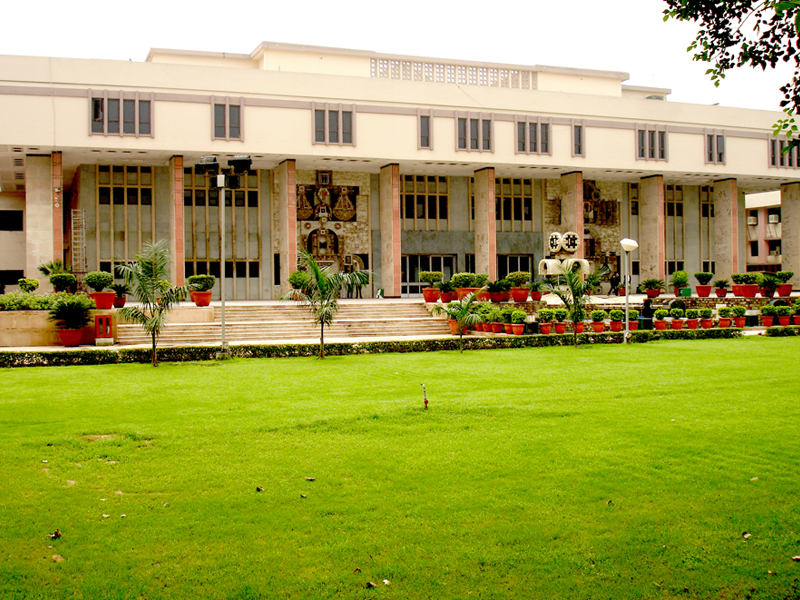
On 12th October, a bench of Delhi High Court consisting of Justice C. Hari Shankar held that Right to legal redress is a fundamental right. It cannot be compromised. When parties entered into a contract, agreeing to submit disputes, which arise, to arbitration, arbitrable disputes, which come within the four corners of the clause, cannot be refused arbitration.
The bench also held that a party invoking arbitration cannot bifurcate its claims, choosing to refer some claims at one stage and others at another, if the contract requires arbitration to be invoked in respect of “all disputes” at the initial stage.
Facts of the case:
The petitioner claims to be an intermediary, which arranges for aircraft charters for its clients, from third parties. The respondent provides charter flights to its customers. Three Aircraft Charter Agreements (in short, “ACAs”) dated 11th August, 2017, were executed between the petitioner and the respondent. Disputes arose. They stand referred, through the intervention of this Court, to an arbitral tribunal comprising Hon’ble Mr. Justice Mukul Mudgal (Retd.), Hon’ble Mr. Justice S.S. Saron (Retd.) and Hon’ble Mr. Justice R.S. Sodhi (Retd.). The petitioner issued a notice, invoking arbitration, to the respondent, under Section 21 of the Arbitration and Conciliation Act, 1996. The petitioner suggested that its claims be referred to the arbitral tribunal comprising Hon’ble Mr. Justice Mukul Mudgal (Retd.), Hon’ble Mr. Justice S.S. Saron (Retd.) and Hon’ble Mr. Justice R.S. Sodhi (Retd.), which was already seized of the disputes between the petitioner and the respondent, albeit at the instance of the respondent. The respondent demurred. The petitioner has, therefore, approached this Court under Section 11(6) of the 1996 Act, for referring the claims of the petitioner to the learned arbitral tribunal comprising Hon’ble Mr. Justice Mukul Mudgal (Retd.), Hon’ble Mr. Justice S.S. Saron (Retd.) and Hon’ble Mr. Justice R.S. Sodhi (Retd.).
Contention of the petitioner:
The following contention has been submitted:
- Mr Sharma asserted that the petitioner’s claims are not time-barred, as three years, from the date of accrual of cause of action, have yet to expire.
- The rejection, by the learned Arbitral Tribunal, of the petitioner’s request to take its counter-claims on record, cannot, submitted Mr Sharma, derogate from the petitioner’s right to agitate the claims substantively by way of fresh arbitral proceedings.
- Mr. Sharma submitted that the petitioner could not be placed in a position in which it would become impossible for the petitioner to agitate its claim which is, otherwise, within time.
Contention of the respondent:
The following contention has been submitted by the respondent:
- Mr. Amit Sibal contended that there was no genuine justification for the petitioner not filing its counterclaims within the time granted, for the said purpose, by the learned arbitral tribunal.
- It was submitted that that claims and counter-claims, which were alive at the inception of the arbitral proceedings, were required to be raised then, and could not be permitted to be raised belatedly. The cause of action in respect of the petitioner’s counter-claims having arisen prior to the invocation of the arbitral process by the respondent, Mr. Sibal submitted that the petitioner is estopped from raising the said claims at this stage.
- Mr Sibal further submitted that the present petition is not maintainable, as the petitioner has not exhausted their pre-arbitral protocol of mutual consultation, envisaged by Clause 26.2 of the ACAs.
- Mr Sibal further contended that, once the learned Arbitral Tribunal had struck the petitioner’s counter claims off the record, it was not open to the petitioner to initiate a parallel arbitral proceeding “as per its own whims and fancies”.
Observation and judgement of the court:
The following observation has been made by the hon'ble bench of the court:
- There are well-recognized exceptions to the principle that the right to legal redress carries, with it, a remedy. Considerations such as limitation, constructive res judicata and the like can render the remedy unavailable, though the right subsists. These, however, are considerations, which the Court (or arbitrator) would take into account, once it is in hearing of the dispute.
- The striking off, from the record, of the counter-claims of the petitioner does not, in the court's view invite, in its wake, rejection of the request of the petitioner to refer the claims to arbitration under Section 11 of the 1996 Act.
- The petitioner can be non-suited on the ground that it did not initiate the arbitral process, in respect of its claims, prior to the notice dated 6th May, 2020.
Thus, the court disposed off the petition after treating the letter dated 6th May, 2020, from the petitioner to the respondent as a notice of arbitration and directing the respondent to appoint an arbitrator within 30 days.
Read Judgment @Latestlaws.com
Picture Source :


















