









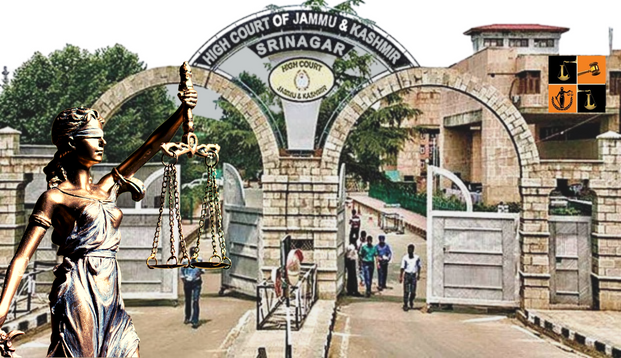
The Single Bench of the Jammu & Kashmir High Court in the case of Bilal Ahmad Ganaie vs Sweety Rashid & Ors. consisting of Justice M. A. Chowdhary held that even in cases where a second revision before the High Court after dismissal of the first one by the Court of Session is barred under Section 397(2) of CrPC, the inherent power of the Court has been held to be available. Thus, it is difficult to conceive that the jurisdiction of the High Court would be held to be barred only because the revisional jurisdiction could also be availed of.
Facts
The Petitioner claimed that the Respondent No.1 filed a maintenance application u/s 125 of CrPC (“Code”) before the Court of the Chief Judicial Magistrate. The case was transferred to the Court of the Judicial Magistrate for disposal. The Petitioner appeared before the trial Court and filed objections against the application. However, the trial Court, in terms of Order dated 04.12.2021, granted interim maintenance of Rs.8,500/- per month to the Respondents even though the Petitioner had already divorced the Respondent No.1 and that she had already been granted maintenance in domestic violence proceedings.
The petitioner filed a revision petition before the court of the learned sessions judge, Pulwama, expressing dissatisfaction with the order issued on 04.12.2021. He argued that the Order was legally flawed because the trial court had overlooked important facts of the case. After hearing both parties, the learned sessions judge dismissed the revision petition on 27.12.2021. The judge stated that the magistrate who issued the impugned order was aware that a previous court had granted interim maintenance of Rs. 10,500 to the respondents under the Protection of Women from Domestic Violence Act (the “D.V. Act”). The judge concluded that this amount was insufficient for the Respondents to support themselves, and therefore, the trial court had made the correct decision. In light of these circumstances, the petitioner filed this petition.
Contentions Made
Petitioner: It was contended that both the trial court and the revisional court made mistakes by not considering the reasonable needs of the respondent and the children, as well as whether the respondent has enough income to maintain their previous standard of living. The revisional court made a misdirected observation that the amount granted under the D.V. Act of Rs. 10,500 was insufficient, leading to the decision to grant interim maintenance of Rs. 8,500 to the respondents. It was also contended that the magistrate did not follow the guidelines set by the Supreme Court in Rajnesh v. Neha, which provide direction for courts when deciding on maintenance and to prevent conflicting orders in different cases.
Respondent: It was contended that the petitioner could not challenge the order of the revision court because they had already filed a revision against the magistrate's order. Section 397(3) of the Code prohibits multiple applications by the same person. The petitioner's use of Section 482 of the Code was deemed as an attempt to avoid this prohibition. Moreover, the petitioner had the responsibility to provide maintenance for his wife and children. Further, it was contended that the Petitioners cannot assume that the magistrate overlooked the guidelines given in Rajnesh v. Neha.
Observations by the Court
The Bench noted the first issue regarding the eligibility of this petition u/s 482. Relying on Mushtaq Ahmad Mir & Ors. v. Mst. Khatija it opined that the availability of a revision petition does not prevent the court from considering an application u/s 482. Even if the revision application is not allowed, other remedies such as Articles 226/227 of the Constitution of India or the inherent power of the court can still be used. The High Court's inherent power is not given by law but is protected by it. Therefore, it is unlikely that the jurisdiction of the High Court would be restricted just because the revisional jurisdiction is also an option.
It noted that in Surya Dev Rai v. Ram Chander Rai the Supreme Court stated that the High Court's inherent power was not restricted by the law but was protected by it. Moreover, it would be unfair to limit the High Court's jurisdiction just because another form of legal recourse is available. This was also expressed in Shakuntala Devi & Ors. v. Chamru Mahto & Anr. by the Supreme Court.
It opined that although the impugned order passed by the Judicial Magistrate was challenged in a Revision Petition, this Court could still consider an application u/s 482 to determine if there had been a miscarriage of justice or if justice would be better served by interfering with the Magistrate's Order. Therefore, it concluded that the Petition filed u/s 482 was valid and should not be considered a subsequent Revision Petition.
Coming to the contention that the learned Magistrate did not follow the law laid in Rajnesh v. Neha, it noted that on the issue of overlapping jurisdiction, the Hon’ble Apex Court held that it was possible to make multiple claims for maintenance under different laws. In subsequent proceedings, the applicant was required to disclose any previous proceedings and orders, and if any changes were necessary, they were to be made in the same proceedings.
Regarding the contention that the respondents did not mention in their application u/s 125 that they had already been granted maintenance under the D.V. Act by another court, upon closer examination of the respondents' application it noted that they did mention the previous court's order granting them interim maintenance.
Judgment
The Bench upheld both the impugned Orders and dismissed this Petition. Any temporary directions that were still in effect were vacated. Any maintenance payments that were deposited with the court and not given to the respondents were to be released to them upon proper identification by their counsel. The court of the learned magistrate was given the authority to enforce the order it passed as per law.
Case: Bilal Ahmad Ganaie vs Sweety Rashid & Ors.
Citation: CRM (M) No. 65/2022 Along with connected CrlMs, on 11th July 2023
Bench: Justice M. A. Chowdhary
For Petitioner: Mr M. A. Qayoom with Mr Mian Muzaffar, Advs.
For Respondents: Mr Shafqat Nazir with Mr Shabir Ahmad Bhat, Advs.
Read Judgment @LatestLaws.com:
Picture Source :




















